
Classic Chimichurri
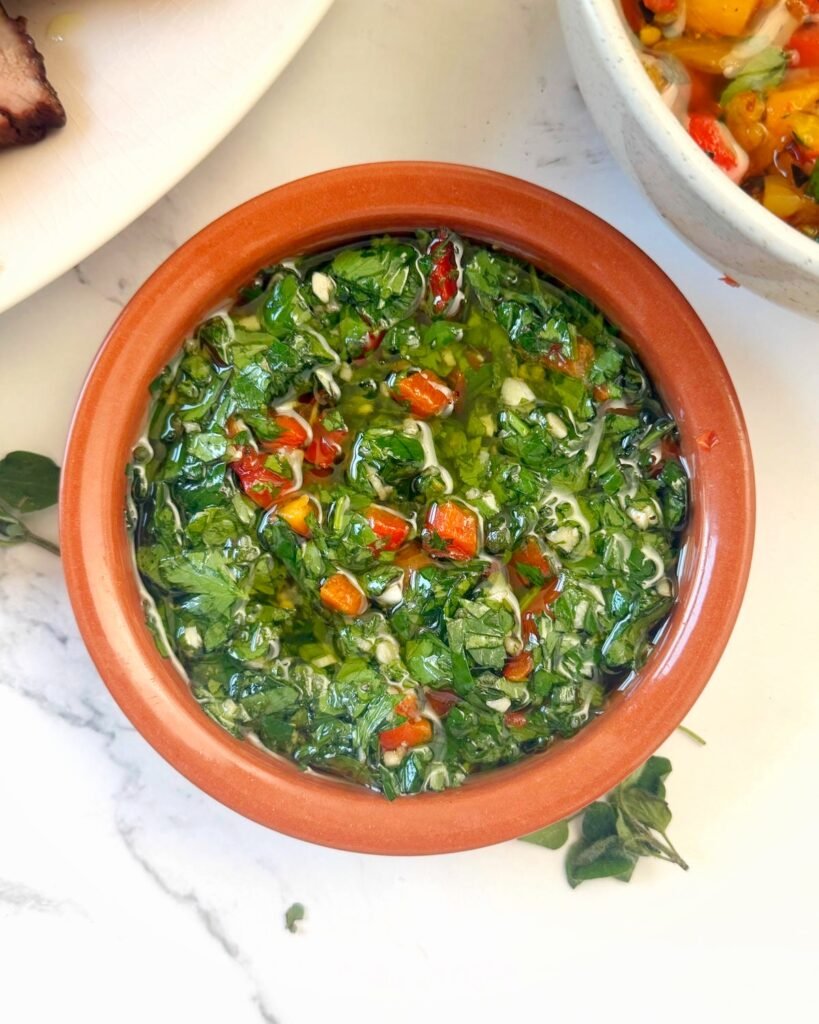
One of my absolutely favourite sauces, that goes with any protein (and I mean ANY) that comes off the grill. Fish, lamb, pork, steak (especially steak!), even mushrooms! This classic chimichurri is packed with flat-leaf parsley, fresh oregano, garlic, roasted capsicum, red wine vinegar and extra virgin olive oil.
This sauce has one job: make grilled food taste even better.
Spoon it over a thick steak and the parsley, oregano and vinegar cut straight through the rich beef. Add it to chicken and even the dried out breast becomes a shining star. Drag a crispy roast potato across the bottom of the almost empty bowl and you may briefly forget the steak exists.
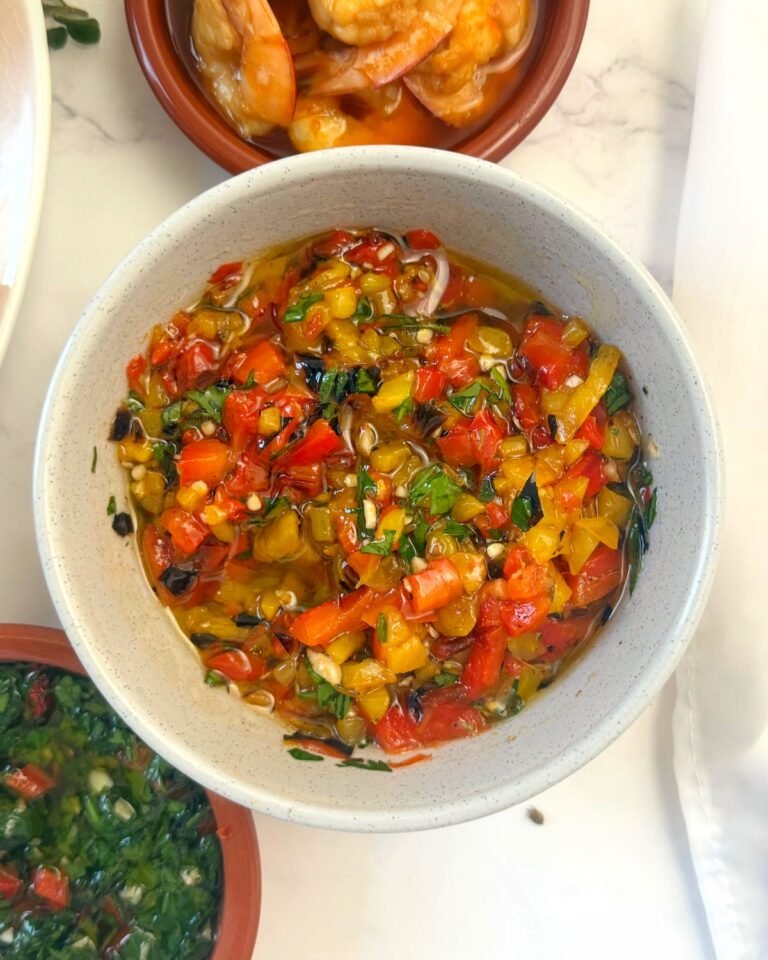
I make this chimichurri for my Florentine-style T-bone steak dinner, where it sits beside bubbling grilled bone marrow and a bowl of red chimichurri. The green version is bright, fresh and garlicky. The red one is smokier and has a little more attitude.
Do we need both? Probably not. Do I put both on the table anyway? Absolutely!
Why homemade chimichurri is worth making
Chimichurri is one of those sauces that delivers a completely unreasonable amount of flavour for about 10 minutes of work.
There is no cooking apart from roasting the capsicum, and even that can happen beside whatever is already on the barbecue. Chop the herbs. Mince the garlic. Add vinegar and olive oil. Put it in a jar and leave it alone for at least 30 minutes.
That last part matters.
Straight after mixing, the garlic can taste a little aggressive, the vinegar sits separately and the herbs are still behaving like individual ingredients. Give them time in the jar and everything softens, mingles and becomes an actual sauce. The garlic mellows. The oregano perfumes the oil. The vinegar works its way through the parsley. The roasted capsicum adds little pockets of sweetness and smoke.
It goes from “chopped things in oil” to chimichurri.
I love recipes where patience does more work than I do 🙂
Chimichurri is closely tied to the grilling cultures of Argentina and Uruguay, where it is served with asado: meats cooked slowly over fire and shared around the table.
That explains why I like it so much. Meat, fire, sauce and people gathering around waiting to eat. Exactly like my family (and some of the neigbours) when the grill gets fired up
Ingredients

- 1 packed cup finely chopped flat-leaf parsley, about 1 large bunch
- 2 tablespoons finely chopped fresh oregano leaves
- 3 garlic cloves, very finely chopped or grated
- 1/4 small red capsicum, roasted and finely chopped
- 3 tablespoons red wine vinegar
- 1/2 cup (125 ml) extra virgin olive oil
- 1/2 teaspoon fine sea salt, plus more to taste
- 1/4 teaspoon freshly ground black pepper
Ingredient notes
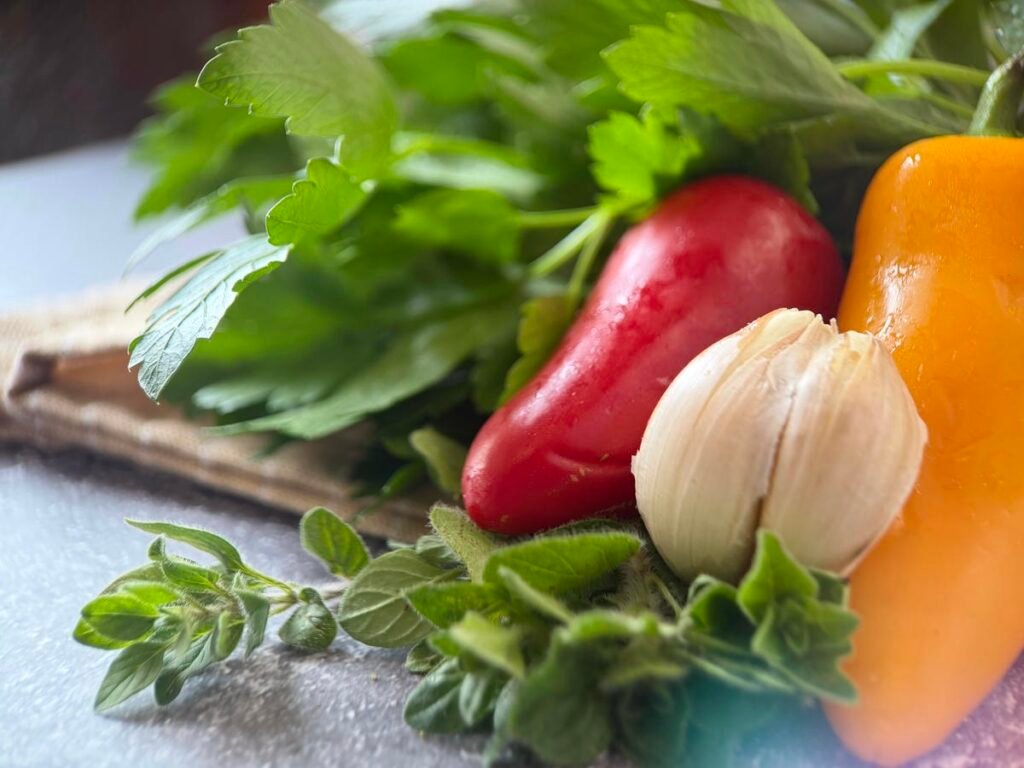
Flat-leaf parsley
Flat-leaf parsley is the body of the sauce. It tastes fresher and stronger than curly parsley and is much easier to chop without finding tiny green pieces throughout the kitchen for the following week.
Use the leaves and the tender upper stems. The thicker lower stems can go into stock or the bin, depending on how ambitious you are feeling.
Fresh oregano
Fresh oregano is softer and more floral than dried oregano. It gives the chimichurri a savoury backbone without dominating the parsley.
Strip the leaves from the woody stems before chopping. Nobody wants to discover a twig while eating expensive steak.
If fresh oregano is unavailable, use about 2 teaspoons of dried oregano. Rub it between your fingers as you add it to wake it up a little.
Garlic
Three cloves gives the sauce a proper garlic flavour without making it hostile.
Finely chop or grate it so it spreads evenly through the jar. Large raw chunks sound rustic until one slips into you spoon and turns your taste buds upside down.
Roasted red capsicum
You can use raw capsicum, but roasted is better. The flesh becomes sweet and soft, and the blackened skin gives it the faint smoky flavour that makes perfect sense beside grilled meat.
Roast the whole capsicum if you are also making my red chimichurri. Use a small portion here and save the rest for the red sauce. This is one of those rare moments when making two sauces is actually efficient, so we should take advantage of it.
Red wine vinegar
Chimichurri needs acidity. Red wine vinegar is sharp enough to balance grilled beef and bone marrow without tasting harsh once it has rested in the oil and herbs.
Taste the sauce after 30 minutes. If it tastes flat, it probably needs another small splash of vinegar or a pinch of salt—not another half-cup of olive oil.
Extra virgin olive oil
Use an olive oil you enjoy eating, because we are not hiding it behind heat. A fruity, balanced extra virgin olive oil is ideal.
This is not the moment for the dusty bottle that has been living beside the stove since you’ve moved in.
How to make classic chimichurri
1. Roast the capsicum
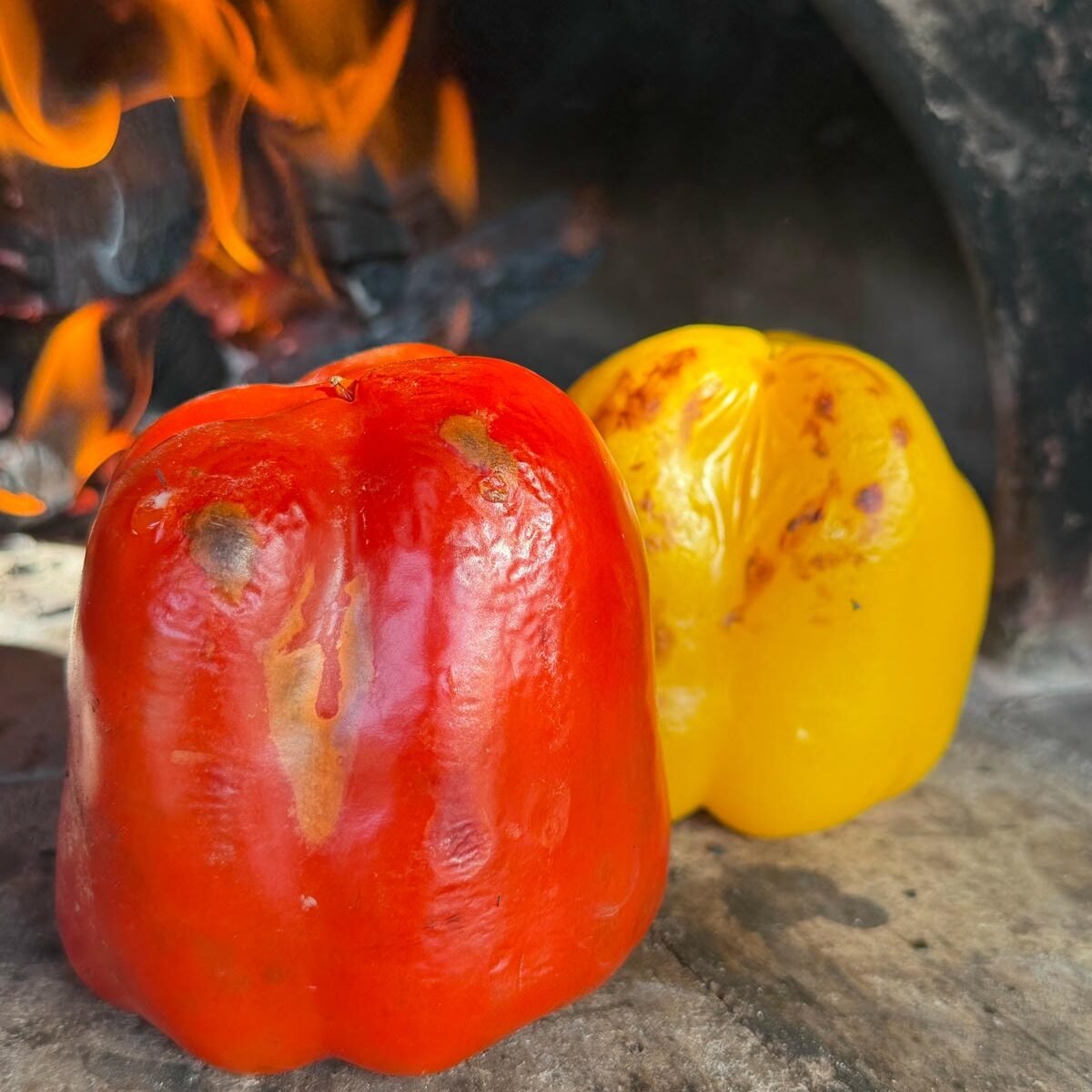
Place the capsicum directly over a gas flame, hot barbecue or wood fire and turn it until the skin is blackened and blistered all over.
Transfer it to a bowl and cover it for 10 minutes. The trapped steam loosens the skin and makes it much easier to peel.
Remove the blackened skin, stalk and seeds, then finely chop the flesh. Do not rinse the capsicum under water unless you absolutely have to. Water washes away the smoky juices we went to the trouble of creating.
If you are making red chimichurri as well, roast the whole capsicum now. Take the small amount needed for this recipe and keep the rest for the red version.
2. Chop the herbs by hand
Finely chop the parsley and oregano with a sharp knife.
You want small pieces that will cling to the steak, not a green paste. A food processor is fast, but it can bruise the herbs and turn the olive oil cloudy and bitter if you let it run too long.
Besides, this recipe takes about 15 minutes. We do not need industrial machinery for a bunch of parsley.
3. Add the garlic, capsicum and vinegar
Place the chopped parsley, oregano, garlic and roasted capsicum into a clean jar or bowl.
Add the red wine vinegar, salt and black pepper. Stir well and leave it for about 5 minutes before adding the olive oil. This gives the vinegar a head start on the raw garlic and helps the salt dissolve.
4. Stir in the olive oil
Pour in the extra virgin olive oil and stir everything together.
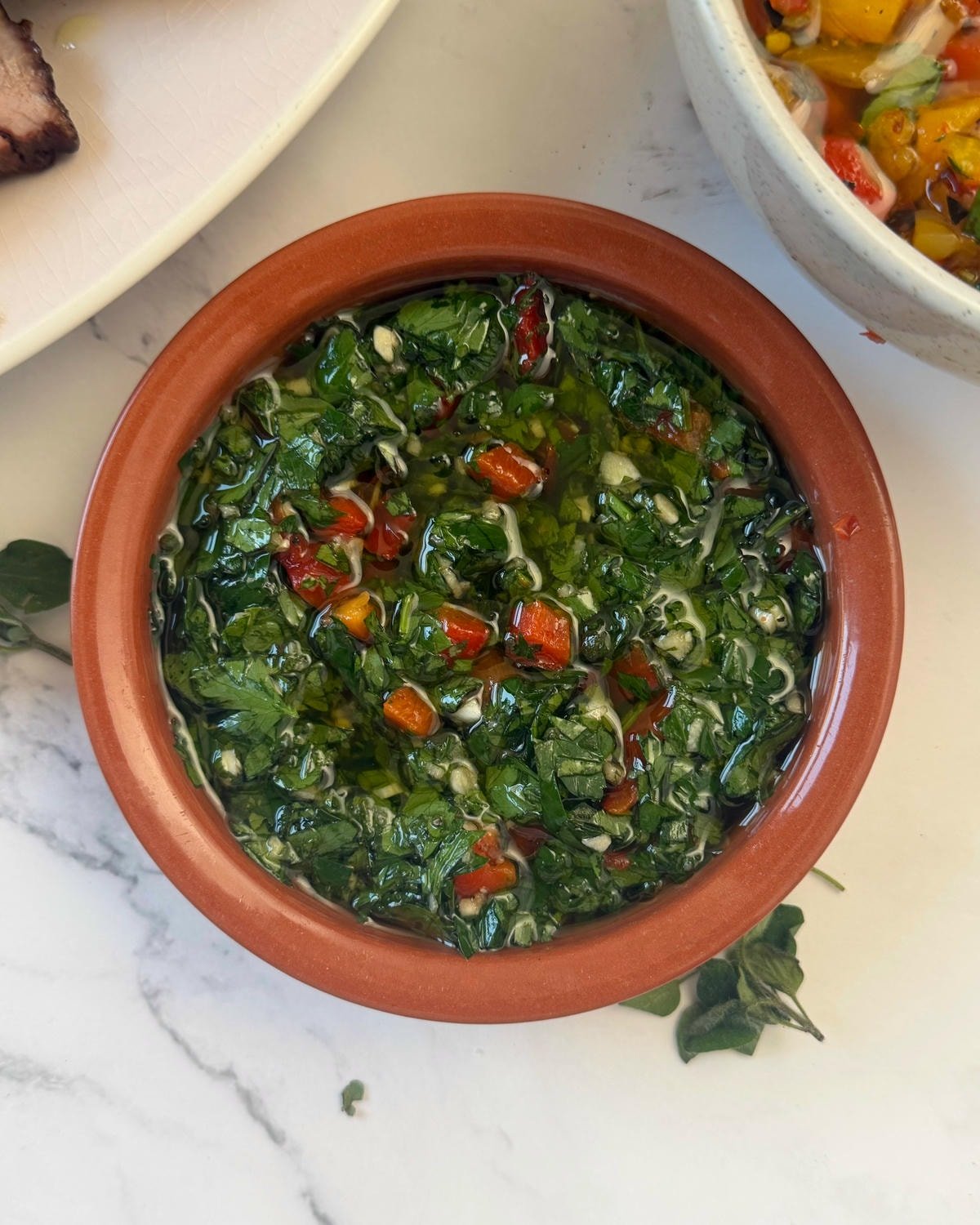
The chimichurri should be loose and spoonable, with plenty of chopped herbs suspended through the oil. It should not look like pesto, and it should definitely not stand up by itself.
If it seems too thick, add another tablespoon of olive oil. If it tastes too oily after resting, add a small splash of vinegar.
5. Leave it in the jar for at least 30 minutes
Seal the jar and leave the chimichurri at room temperature for at least 30 minutes before serving.
An hour is even better. Several hours in the fridge is excellent. The ingredients need a little time to stop shouting over one another and become friends.
If you are leaving it for longer than about two hours, put the jar in the fridge. Take it out 20–30 minutes before serving so the olive oil can loosen and the sauce can return to room temperature.
Then taste it properly. Add another pinch of salt or splash of vinegar if needed.
Serve it with my Florentine-style T-bone steak
This chimichurri was made for my Florentine-style T-bone steak with grilled bone marrow.
The steak is 1–1.2 kg, cut properly thick and cooked slowly over wood for around 40–60 minutes. It arrives at the table sliced around the bone, with a dark smoky crust and a warm pink centre.
Then we spoon this chimichurri over it.
The vinegar cuts through the beef and molten marrow. The herbs brighten everything. The olive oil mixes with the steak juices at the bottom of the board and creates the sort of sauce people start chasing with pieces of crispy roasted potato.
Put the chimichurri in a jar or small bowl and let everyone add their own. I always think I have made too much. I am almost always wrong.
Classic versus red chimichurri
My classic chimichurri is the bright one. Parsley, fresh oregano, garlic, vinegar and olive oil lead the way, with just enough roasted capsicum to add sweetness and smoke.
My red chimichurri is deeper and bolder. Roasted red capsicum becomes a main ingredient rather than a supporting one, and the sauce leans harder into smoky flavours.
For a normal steak dinner, choose whichever one suits your mood.
For the full Florentine-style T-bone feast, make both. The steak is already enormous and there is grilled bone marrow on the table. This is not the time to be restrained.
What else can I serve with chimichurri?
Did I mention this chimichurri goes with anything that comes off the grill?
- Spoon it over grilled chicken, lamb or pork.
- Serve it with prawns, fish or other seafood.
- Toss it through warm roasted potatoes.
- Add it to grilled capsicum, zucchini, eggplant or mushrooms.
- Spoon it over fried or poached eggs.
- Use it as a dressing for a grain or bean salad.
- Put it beside warm bread and watch everybody ruin their appetite before dinner.
I usually bring the jar straight to the table. A small decorative drizzle is not enough. People should be able to spoon it over everything until everyone shameless has parsley stuck on their teeth.
Ingredients
- 1 cup parsley chopped
- 2 tbsp fresh oregano 2 tsp if using dried
- 3 cloves garlic
- 1/4 small red capsicum
- 125 ml extra virgin olive oil
- 1/2 tsp salt
- 1/4 tsp pepper
Instructions
- Chop Capsicum. Roast capsicum over a fire, bbq, oven or air fryer. Then diced finely.
- Finely chop the parsley and fresh oregano by hand. Mince garlic. Add them to a clean jar or bowl with the garlic and roasted capsicum.
- Add the red wine vinegar, salt and black pepper.
- Pour in the extra virgin olive oil and stir until the herbs are evenly suspended. Add another tablespoon of oil if the sauce is too thick.
- Seal the jar and leave the chimichurri for at least 30 minutes before serving. Refrigerate it if resting for longer than about 2 hours.
- Stir and taste before serving. Adjust with another pinch of salt or small splash of vinegar if needed.
Nutrition
Common questions
Enjoy 🙂 – Damo