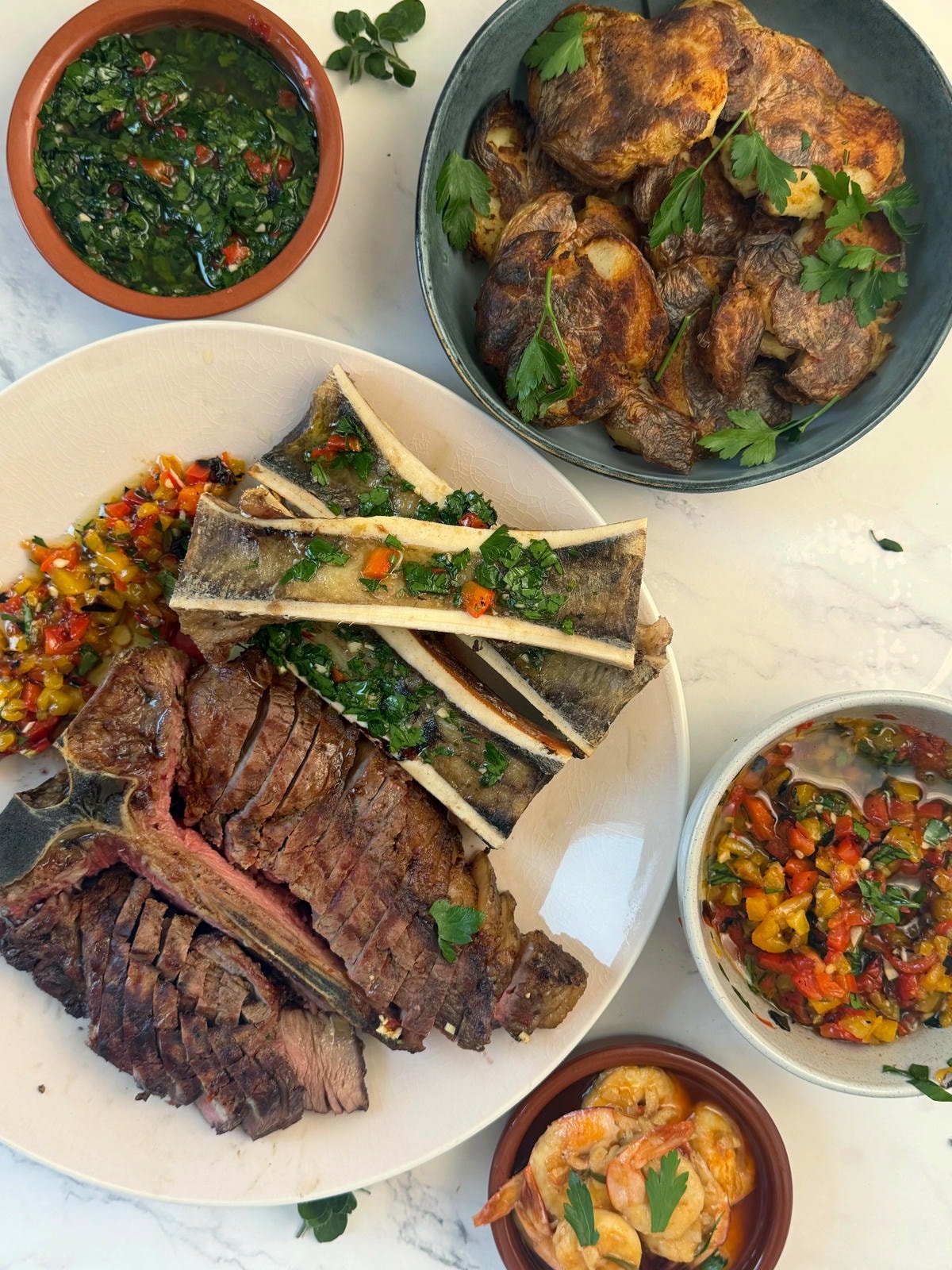
Florentine-Style T-Bone Steak dinner with Bone Marrow and Two Chimichurris
A 1–1.2 kg T-bone cooked slowly over wood, served with roasted bone marrow, crispy roast potatoes and two completely unnecessary—but absolutely correct—bowls of chimichurri.
This is the kind of dinner I only make for people I truly like.
Actually, no. This is the kind of dinner I reserve for the people I love.
It is definitely not for the “Can I bring a friend along?” crowd. That friend can have the sirloin. A thick Florentine-style T-bone, cooked over a wood fire and brought to the table with grilled bone marrow and two chimichurri sauces, is for family and friends who have earned their place at the dinner table.
Nothing says “I love you” quite like 1.2 kilograms of beef cooked slowly over a wood fire. Flowers are nice. A perfectly pink T-bone with a dark smoky crust and molten bone marrow is better.
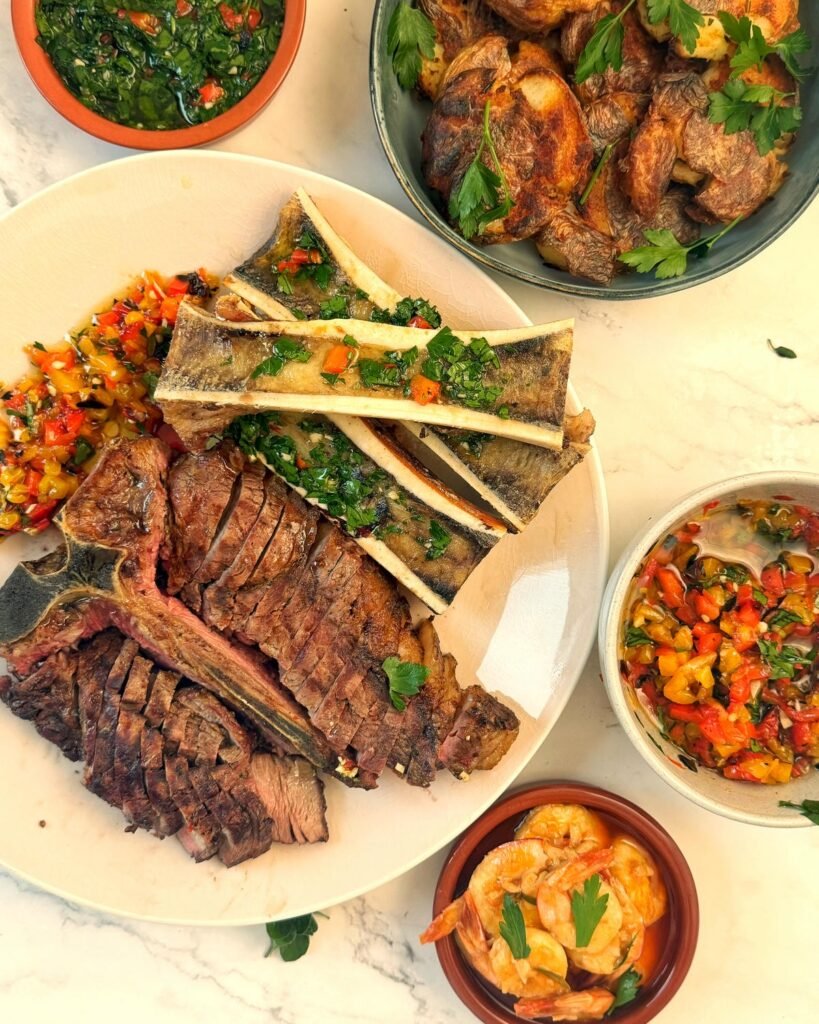
This is a proper middle-of-the-table dinner. I carve the steak on a big board, return the sliced meat to the bone and bring the whole thing out with crispy roasted potatoes, classic chimichurri and red chimichurri. Everyone reaches in, spoons over far too much sauce and uses the potatoes to collect whatever is left on the board.
That last part is important. Steak juice s mixed with chimichurri and bone marrow are never be left behind.
What makes this Florentine-style?
The inspiration comes from bistecca alla Fiorentina: a huge, very thick T-bone cooked over fire, kept simple and sliced for sharing.
My version is Florentine-style rather than an attempt to police several centuries of Tuscan cooking from my backyard in Sydney. I cook it slowly over wood on my Argentinian grill, then serve it with grilled bone marrow and two chimichurris. Tuscany may not have asked for that last part, but nobody sitting at my table has complained.
The important things stay the same. Buy a seriously thick bone-in steak. Use a real fire if you can. Cook it patiently. Keep the beef itself simple. Then carve it in the middle of the table and let everybody fight over the fillet.
Go to the butcher
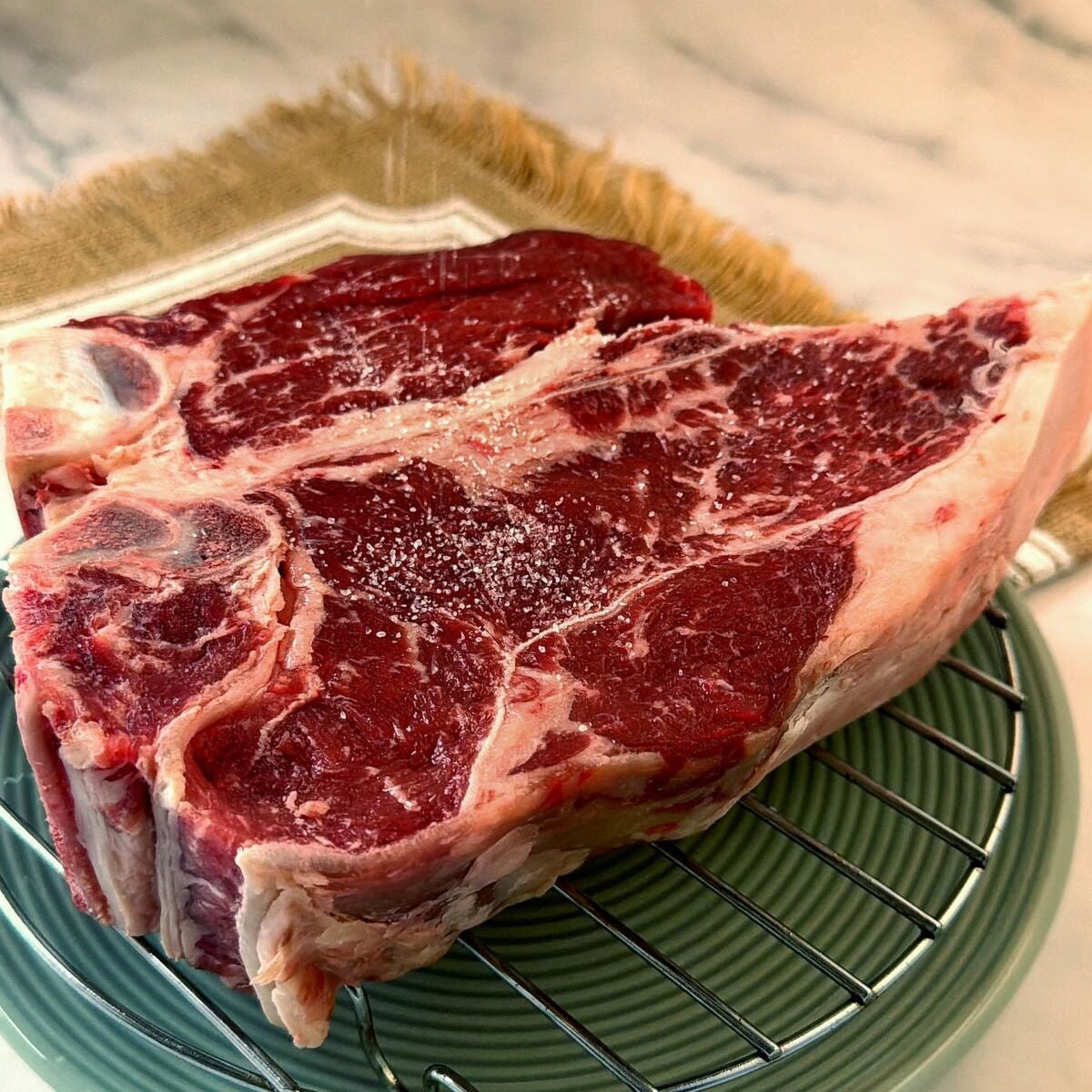
Skip the supermarket for this one. I have nothing against supermarket steak for a Tuesday night, but this is not a Tuesday-night steak. You need a butcher who can cut it to order.
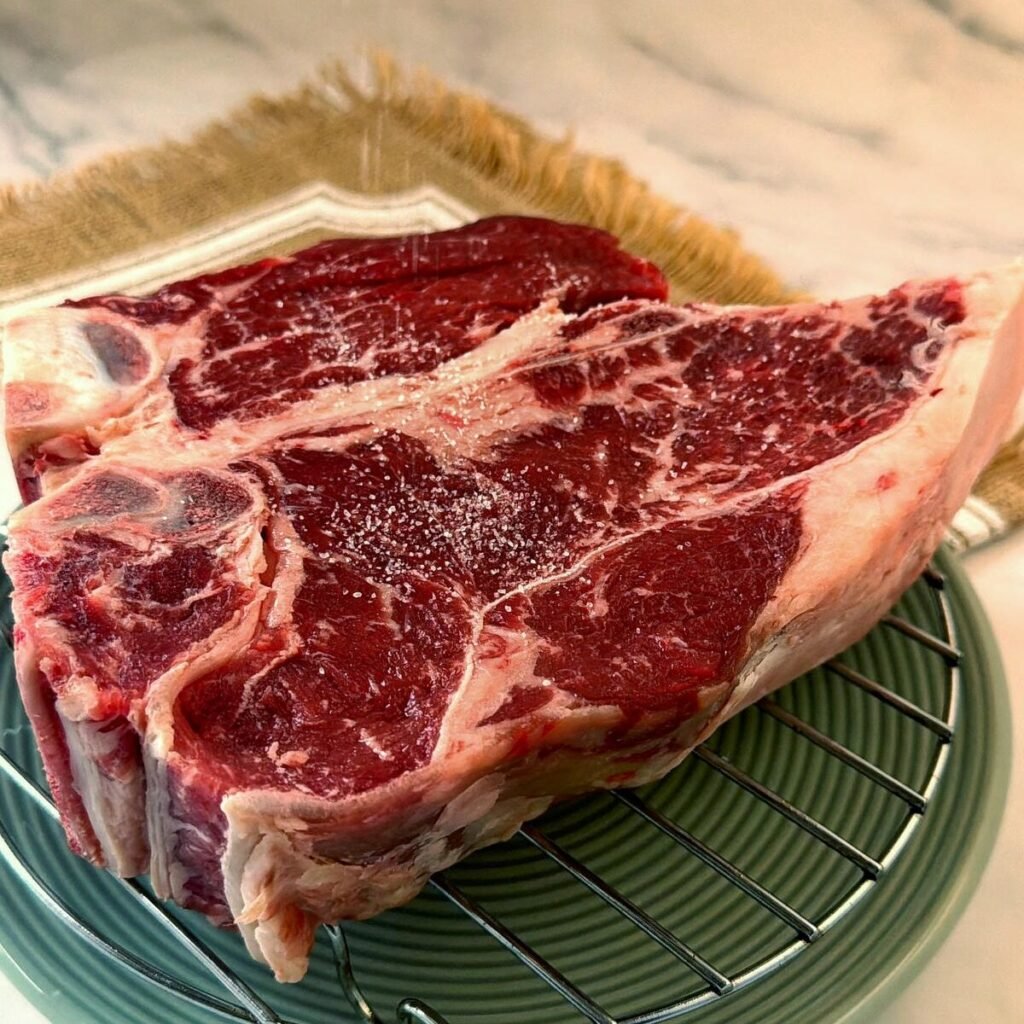
Ask for a thick T-bone weighing around 1–1.2 kg. And when I say thick, I mean thick. Around 5–7 cm is the territory we are looking for. If it looks like something you could cook in six minutes after work, it is not the steak for this dinner.
I also ask for a T-bone from the end with the larger fillet. The size of the fillet changes as the butcher moves along the short loin, and I want as much of that ridiculously tender side as possible.
Why cook one big steak instead of individual steaks?
A steak this thick gives you something thin steaks cannot: time. Time for flavour. Time for tenderness. Time for a none-sensible amount of beers before dinner.
You can build a dark, smoky crust while the centre slowly warms to a beautiful rosy pink. The strip side stays juicy, the fillet remains tender and the bone protects the meat running along it. Once rested and sliced, one steak becomes a platter that everyone can share.
It also makes dinner feel generous. I love putting one enormous steak in the middle of the table rather than handing out separate plates like I am running a canteen. Some people want the fatty edge. Some want the fillet (actually everyone wants the fillet…). Someone will claim they only want a couple slices and then quietly take four more.
This is family dinner.
Ingredients
For the steak
- 1 T-bone steak, approximately 1–1.2 kg and 5–7 cm thick
- 2 teaspoons fine sea salt, plus extra to finish
- Freshly ground black pepper
- 1 tablespoon olive oil, only if needed for a pan or gas grill
For the bone marrow
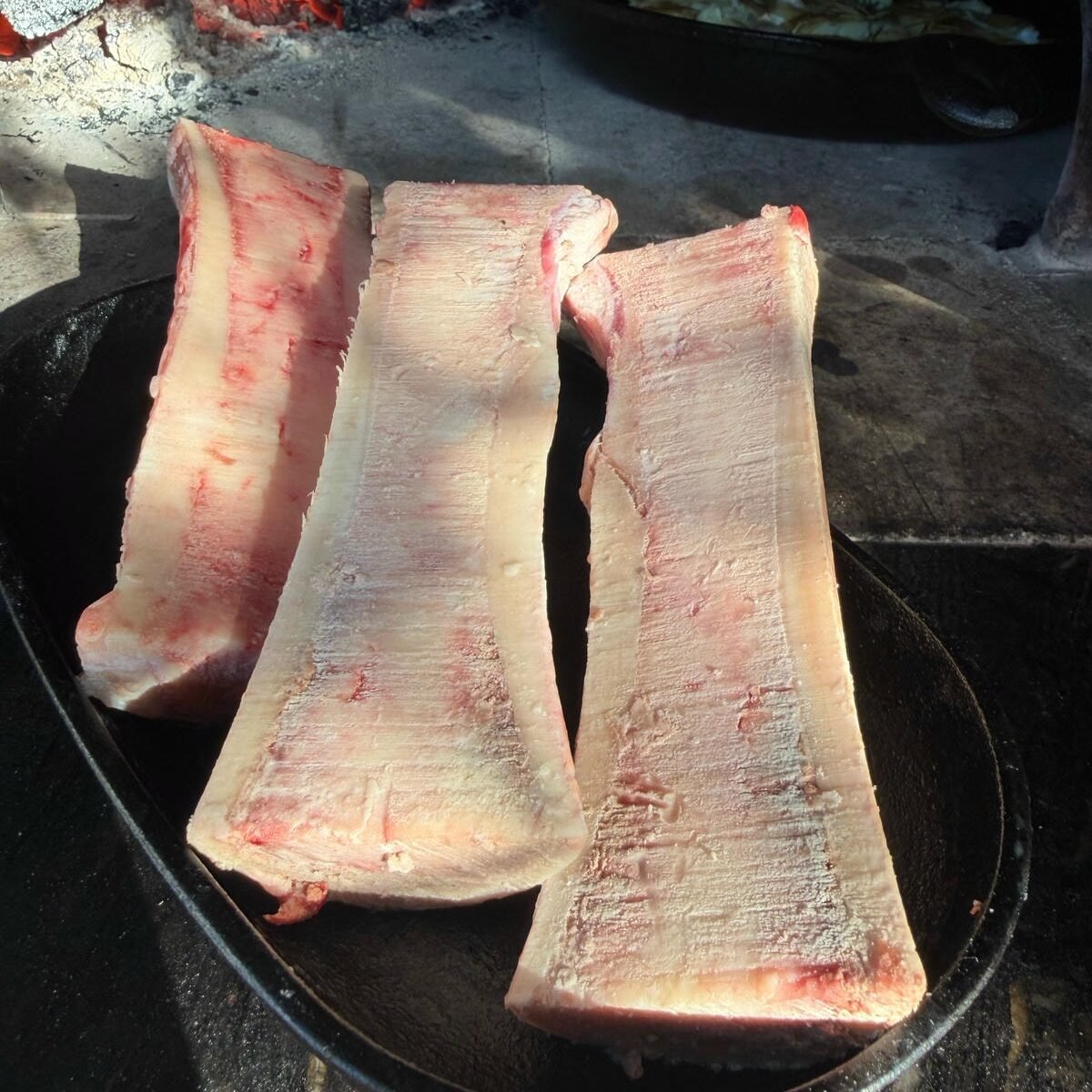
- 3 canoe-cut marrow bone halves
- Fine sea salt
- Grilled bread, to serve (optional, but highly recommended)
To complete the dinner
- classic chimichurri
- red chimichurri
- crispy roasted potatoes
- Garlic butter prawns, if you are turning it into surf and turf
Wood, charcoal, gas or pan—which one should you use?
Wood fire: my first choice
I cook this on my Argentinian grill over wood.
It is not the quickest option, which is exactly the point. Lighting the fire, waiting for the wood to burn down and moving the embers around is part of the dinner.
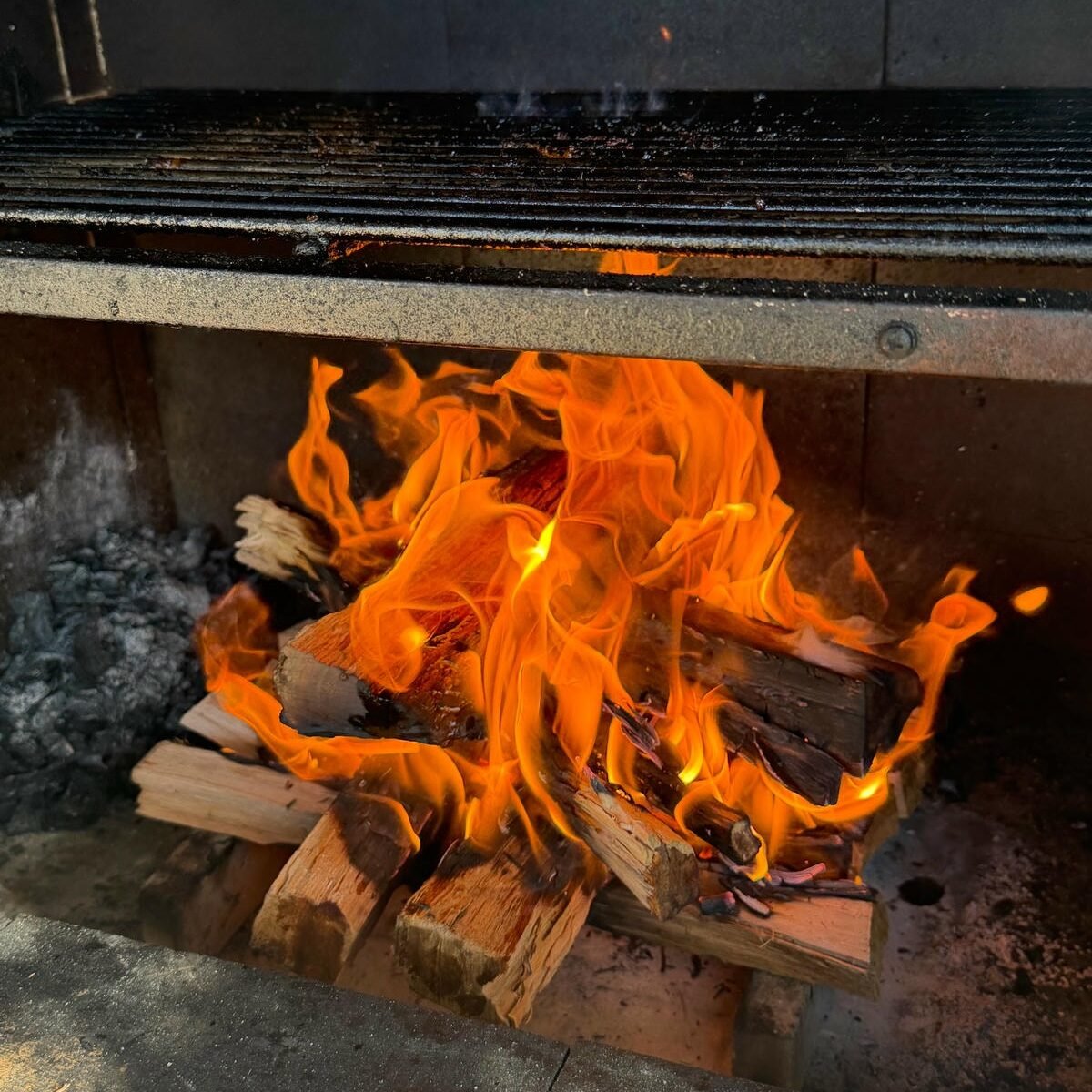
Do not cook it over tall, angry flames. The ones you get when you first light the fire. These flames are actually not very hot and they cover your food with alot of soot. I personally don’t want until all the wood burns down to coals, I like to use it at the halfway point which is a solid bed of coals and a few chunks of wood. This gives the perfect balance of constant reliable heat, and the meat still get licks of flames and smoke from the wood chunks. And I control the heat by raising or lowering the grill. Cooked over like fire using wood can be quite challenging without the ability to raise and lower the grill.
Charcoal: the best alternative
Charcoal gives you excellent heat and plenty of smoky flavour. Set up a two-zone fire with a moderate side for the slow cook and a hotter side for the final crust.
If you have a kettle or hooded charcoal barbecue, keep the lid closed during the gentle stage. On an open grill, raise the grate or use fewer coals beneath the steak and turn it regularly.
Gas barbecue: still a very good dinner
Use a hooded gas barbecue and create two heat zones. Cook the steak over the cooler side with the hood down, then move it over direct high heat to finish the crust.
If you don’t have zone like the smaller Weber Qs, just cook it on the lowest setting with the hood closed. I have used this method plenty of times and the steak turns our beautiful.
You will miss some of the wood smoke, but you will still have a 1.2 kg T-bone, bone marrow and two sauces. Nobody sensible is going home disappointed.
Cast-iron pan and oven: when fire is not happening
Use the biggest heavy cast-iron pan you own. If the steak does not fit, the pan method has been defeated by basic geometry and you should use the barbecue.
Sear the steak in the hot pan, including the fat edge, then transfer the pan to an oven at 180 for around 30 minutes to finish gently. However do not go off time, use your meat thermometer to be sure. It will not have the same smoky flavour as wood, but it will still give you a fantastic crust and a juicy centre.
How to cook a 1–1.2 kg T-bone over wood
1. Salt the steak ahead of time
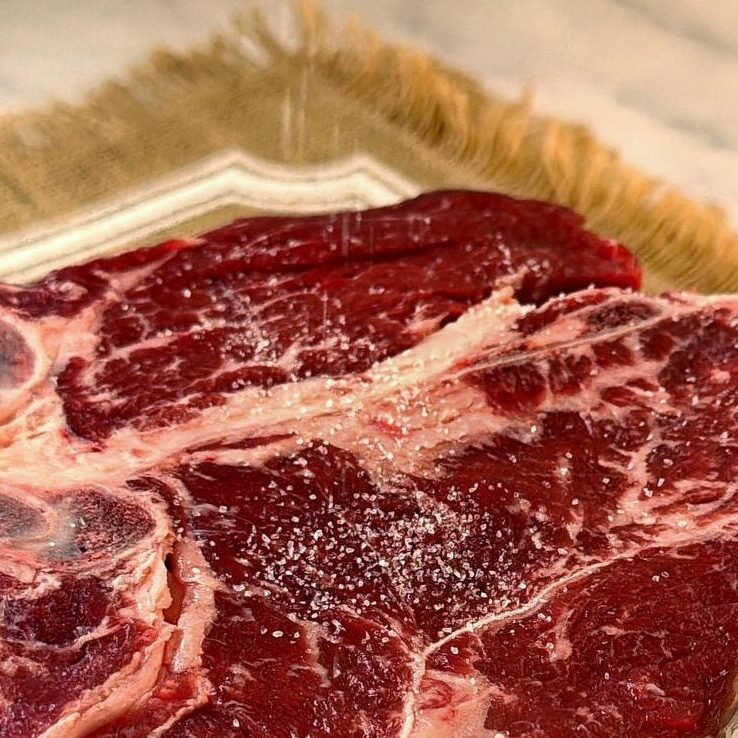
Pat the steak dry and season it all over with the fine sea salt, including the fat edge.
Place it uncovered on a rack in the fridge overnight if you can. The salt has time to work into the surface and the fridge dries the outside, which helps us build a much better crust. You will notice the meat will look more red the next day.
If you forgot—and I often remember dinner before I remember planning dinner—salt it at least one hour before cooking. It will still be excellent.
Take the steak out while you prepare the fire, roughly 45–60 minutes before it goes onto the grill. We are taking the deep fridge chill off it, not leaving it on the bench for the entire afternoon. if you throw the steak straight on the grill from the fridge, the steak will not be as tender and soft.
2. Build the fire and wait for embers
Light a good hardwood fire and let it burn until you have a bed of glowing embers with small, manageable flames.
On my Argentinian grill, I keep the grate high at the beginning. Hold your hand carefully at grill height and count to 5. If its too hot to keep holding my hands there for 5 seconds, then the grill is too close to the fire. If longer, then grill is too far from the fire. We want the inside to warm gradually before the outside becomes too dark.
3. Start high and cook it slowly
Place the T-bone on the raised grill over a moderate bed of embers.
Cook it slowly, turning it every 5–8 minutes so both sides colour evenly. Hold the fatty edge over the heat for a few minutes as well. You want that fat softened and golden, not pale and chewy.
Do not keep stabbing the steak, squeezing it or shuffling it every 20 seconds because standing still feels uncomfortable. Give the heat time to work.
For a steak this thick, I aim for a total cooking time of roughly 40–60 minutes. The exact time changes with the thickness of the meat, the starting temperature, the weather and the mood of the fire. Treat the clock as a rough guide. Your thermometer gets the final vote.
4. Build the crust
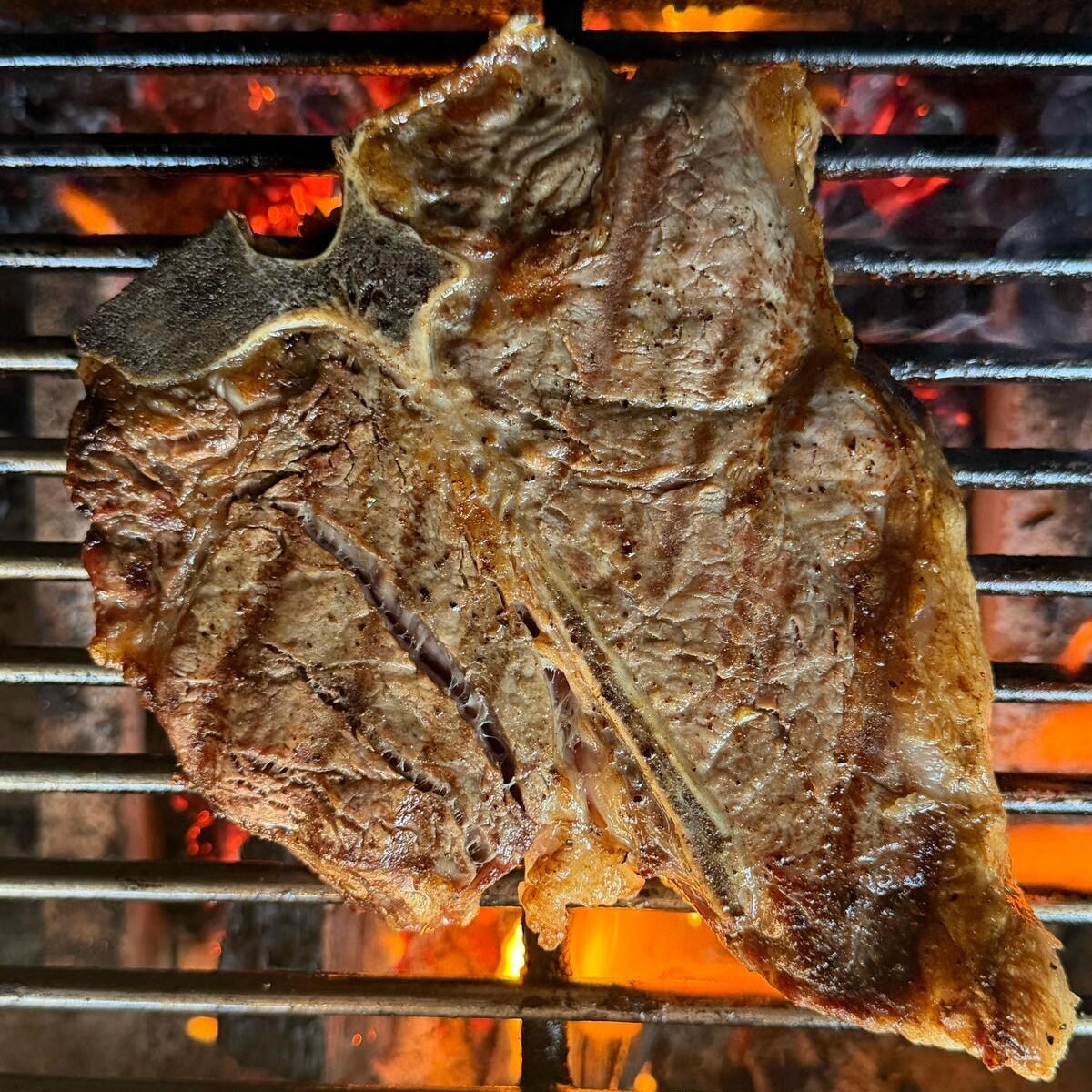
Once the steak has been cooking gently and the centre is approaching your target temperature, lower the grill or rake a stronger layer of embers underneath it.
Cook for a few minutes on each side until the surface is deeply browned with dark charred edges. Watch the fat closely. Dripping fat can wake the fire up very quickly, and this is not the moment to wander inside looking for a serving bowl.
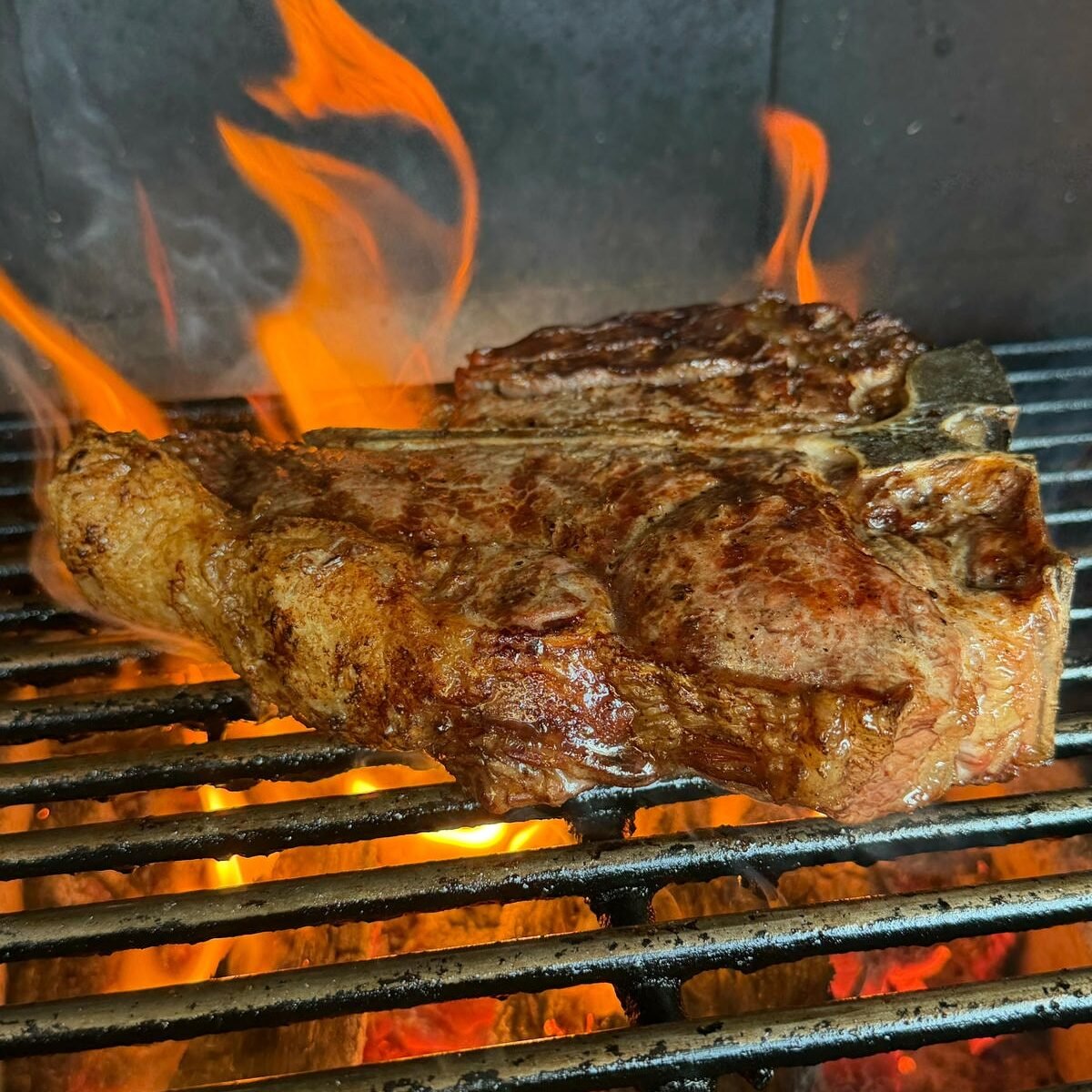
If the flames rise, lift the grill or move the steak away until they settle. A little flame is part of live-fire cooking. A continuous fireball is dinner asking for help.
5. Check the temperature
Insert an instant-read thermometer into the thickest part of the strip side, away from the bone. Check the fillet separately because it can cook at a different rate.
For medium-rare, I remove the steak at approximately 52–53°C. During the rest, it should rise into the mid-50s. If you prefer it rarer, pull it a few degrees earlier. If you like it medium, take it closer to 56–57°C before resting.
The fillet may reach temperature first. If that happens, angle the fillet end away from the strongest heat while the thicker strip side catches up. This is why an adjustable grill and movable embers are so useful—we are cooking dinner, not obeying a single fixed hot spot.
6. Rest it properly
Move the steak to a board and rest it for 10–15 minutes.
Do not cover it tightly in foil. That beautiful crust has worked hard and does not deserve to be steamed into softness. A very loose piece of foil is fine if the weather is cold.
Grill the bone marrow while the steak rests
The resting time is when I cook the bone marrow. It keeps the timing simple and means both arrive at the table hot.
Season the cut side of the marrow bones with salt, then place them cut-side up over moderate heat. Cook for approximately 10–15 minutes, depending on their size.
They are ready when the marrow is soft, glossy and bubbling around the edges. It should give easily when touched with a small knife but still sit inside the bone. If you cook it until it completely liquefies and falls through the grill, the fire has just eaten the most expensive part.
Bring the bones to the table with a small spoon and some grilled bread. You can spread the marrow over the bread, but my favourite move is spooning a little directly onto the sliced steak before adding chimichurri.
Rich? Extremely. Worth it? Obviously.
How to carve a thick T-bone
Use a sharp knife to cut the strip steak and fillet away from the bone in two whole pieces.
Slice both pieces across the grain into thick strips. I like slices around 1–1.5 cm wide—substantial enough to stay juicy but easy to grab from the board.
Return the slices to their original sides of the bone so everybody can see which is the fillet and which is the strip. Sprinkle with a little flaky salt and spoon over some of the resting juices.
Then put the entire board in the middle of the table.
Do not pre-plate it. Half the pleasure is everyone choosing their favourite piece, my boy always goes for the fillet because it’s the more tender cut. But little did they know that I rendered out the fat on the strip side so well that strip steak is crispy AND fatty at the same time hehehe.
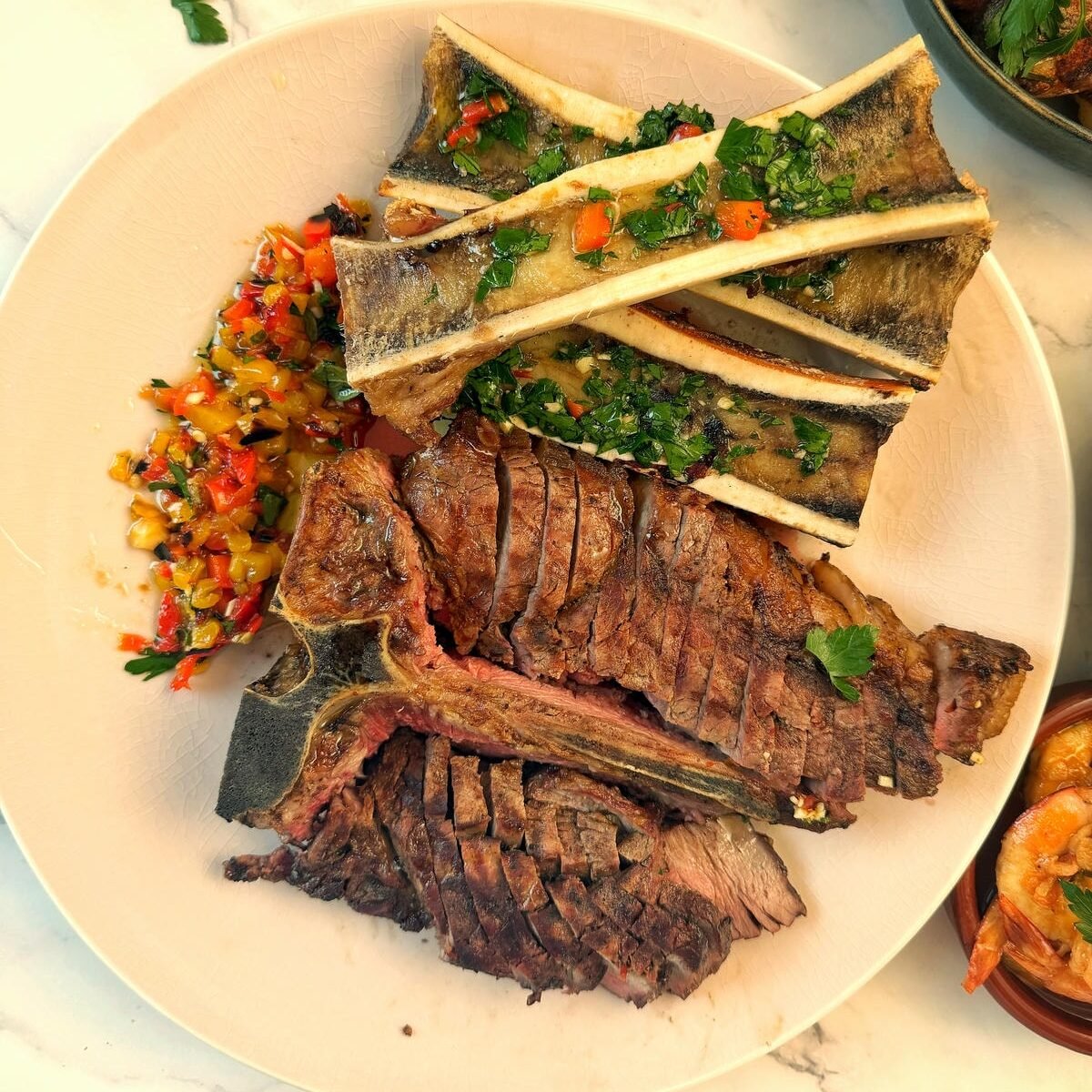
Choose your chimichurri—or make both
Classic chimichurri
My classic chimichurri is fresh, sharp and packed with herbs, garlic and vinegar. It cuts straight through the richness of the beef and marrow. If you only make one sauce, this is the one.
Red chimichurri
My red chimichurri is smokier, deeper and a little punchier. It is so good against the charred fat and particularly good spooned over the strip side.
The crispy roast potatoes are not an afterthought
Serve the steak with a huge bowl of my crispy roasted potatoes.
They bring the crunch this dinner needs, but their real job begins after they hit the plate. Drag one through the beef juices. Add a little marrow. Spoon chimichurri over the top.
At that point the potato is no longer a side dish. It is a delivery vessel.
Make it surf and turf with my garlic butter prawns
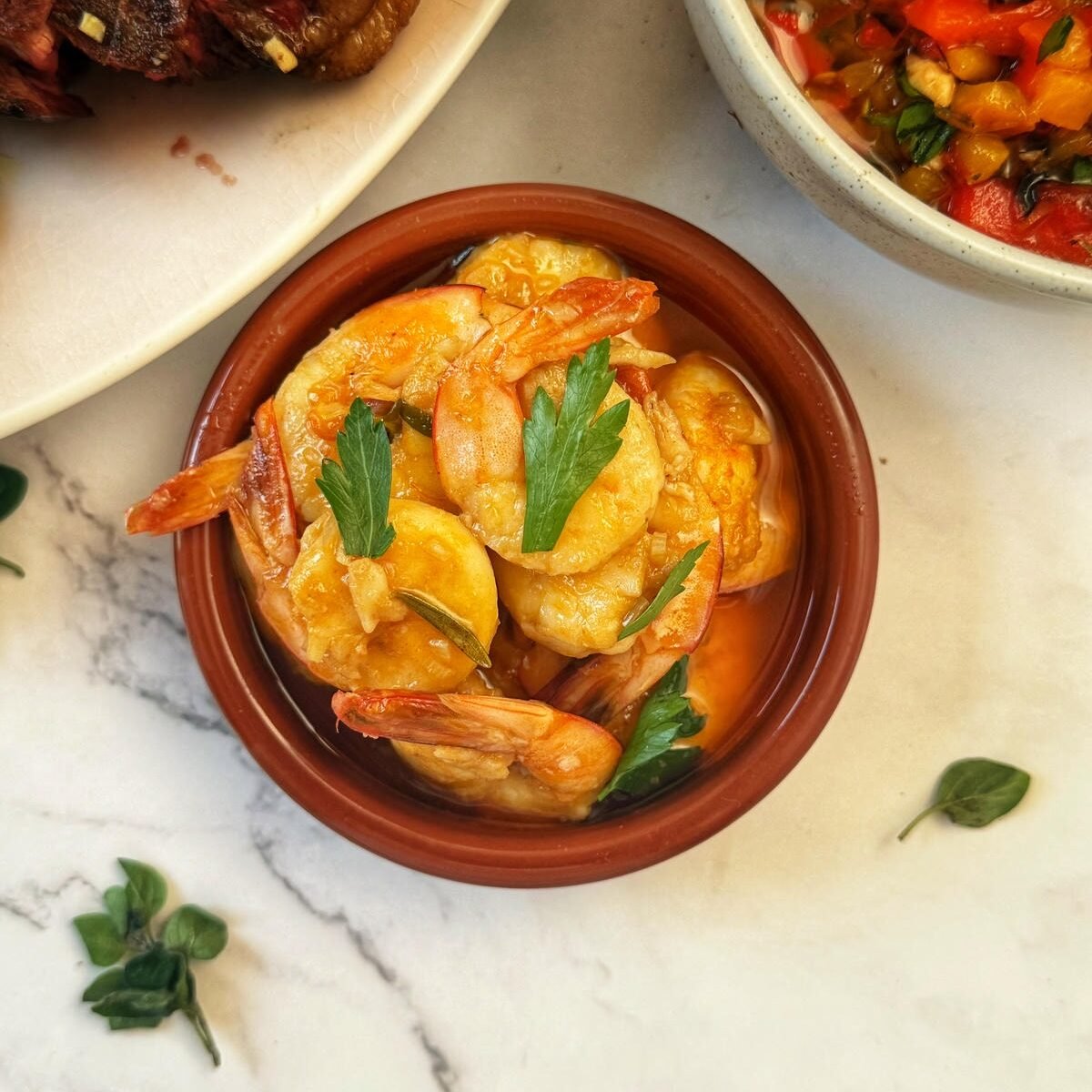
If this dinner is for somebody you really, really love—or you simply enjoy making the table look completely unreasonable—add my garlic butter prawns.
The prawns cook quickly while the steak rests, so they do not turn the afternoon into a military operation. Pile them beside the carved T-bone or serve them in their own hot pan with all that garlic butter. Don’t throw out the butter, the butter is literally liquid gold! spoon that over a few pieces of steak and you’ll know what I mean. Grab a piece of bread to take a dip and you’ll know what I mean.
Smoky beef, sweet prawns, bubbling marrow, crisp potatoes and two chimichurris. It is the sort of surf and turf that makes the restaurant version look a little shy.
How I time the whole steak dinner
This might seem like a lot and if you find yourself frazzled with all the dishes involved. I hope this guide helps to calm your nerves. Most of the work can happen before the steak touches the grill if you follow the bellow guideL
- The day before: salt the steak and leave it uncovered in the fridge. Make both chimichurris.
- Earlier that day: boil the potatoes and get the marrow bones out of the freezer if they’re in there (I always have marrow in the freezer).
- About 90 minutes before eating: light the wood fire and let it burn down to embers.
- About 60 minutes before eating: start cooking the steak slowly.
- While the steak cooks: roast the potatoes.
- While the steak rests: grill the bone marrow and cook the garlic butter prawns, if you are making them.
- Just before serving: carve the steak, return it to the bone and bring everything to the middle of the table.
There is no frantic last-minute plating. Just one enormous board, several bowls and a very good reason to open a bottle of something something.
How to enjoy the meal
Like all my other meals and recipes, it’s really up to you how to enjoy the many componets of this meal; the t-bone, chimichurries, bone marrow and crispy potatoes. But how our family likes to enjoy this is we use piece of steak and the potatos as a vessel for the chimichurri. Each bit of steak must always have a load of chimichurri.
Drip or slather one of the chimichurri on a few slices of steak and put the whole thing in your mouth.
Enjoy the potatoes as it is or lather chimichurri over the potatoes so all that flavourful olive oil get into all the nooks and crannies of the potatoes. Mouthgasm! That’s how a reasonable person would this meal.
However my two boys though… steak, more steak, only steak, and maybe some chimichurri oil without the ‘green stuff’…
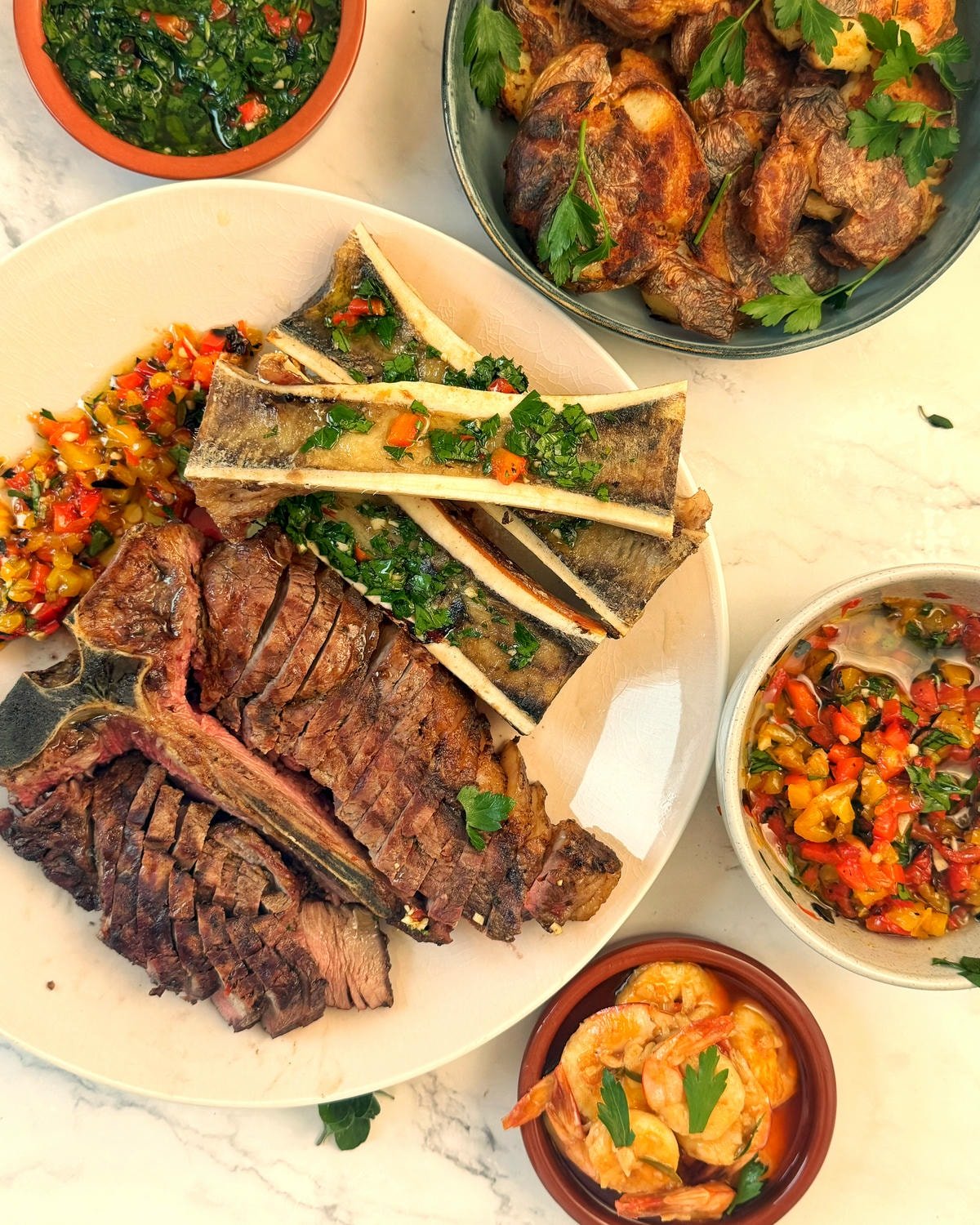
Florentine-Style T-Bone Steak Dinner
Ingredients
Method
- Dry brine. Pat the T-bone dry and season all over with 2 teaspoons of fine sea salt. Place it uncovered on a rack in the fridge overnight, or salt it at least 1 hour before cooking.
- Temper steak and season. Remove the steak from the fridge 45–60 minutes before cooking. Rub all over with olive oil and season with pepper. DO NOT ADD MORE SALT. Light a hardwood fire and allow it to burn down to a steady bed of glowing embers.
- Grill steak. Set grilling temperature to low-medium. Place the steak on the grill and cook slowly, turning every 5–8 minutes. Briefly hold the fat edge toward the heat to help it render.
- Slow cooking. Continue cooking gently until the centre is approaching the desired temperature. Allow approximately 40–60 minutes in total, but begin checking with a thermometer after about 35 minutes.
- Build the crust. Lower the grill or rake stronger embers underneath the steak. Cook for a few minutes on each side until deeply browned and lightly charred. Move it away if dripping fat causes sustained flames.
- For medium-rare, remove the steak when the strip side reaches approximately 52–53°C. Check the fillet separately and angle it away from stronger heat if it is cooking faster.
- Let it rest. Transfer the steak to a board and rest uncovered for 10–15 minutes.
- Roast bone marrow. While the steak rests, season the marrow bones and grill them cut-side up over moderate heat for 10–15 minutes, until the marrow is soft and bubbling but still held inside the bones. Marrow can also be roasted in the oven or airfryer at 200c for 15 minutes.
- Cut steak. Cut the strip and fillet away from the T-shaped bone. Slice both pieces across the grain into 1–1.5 cm strips, then arrange them back around the bone. Season with flaky salt and spoon over the resting juices.
- Serve immediately with the grilled marrow, crispy roasted potatoes, classic chimichurri, red chimichurri and optional garlic butter prawns.
Notes
Tried this recipe?
Let us know how it was!Enjoy 🙂 – Damo