Bà Ngoại’s Vietnamese Rice Paper Spring Rolls
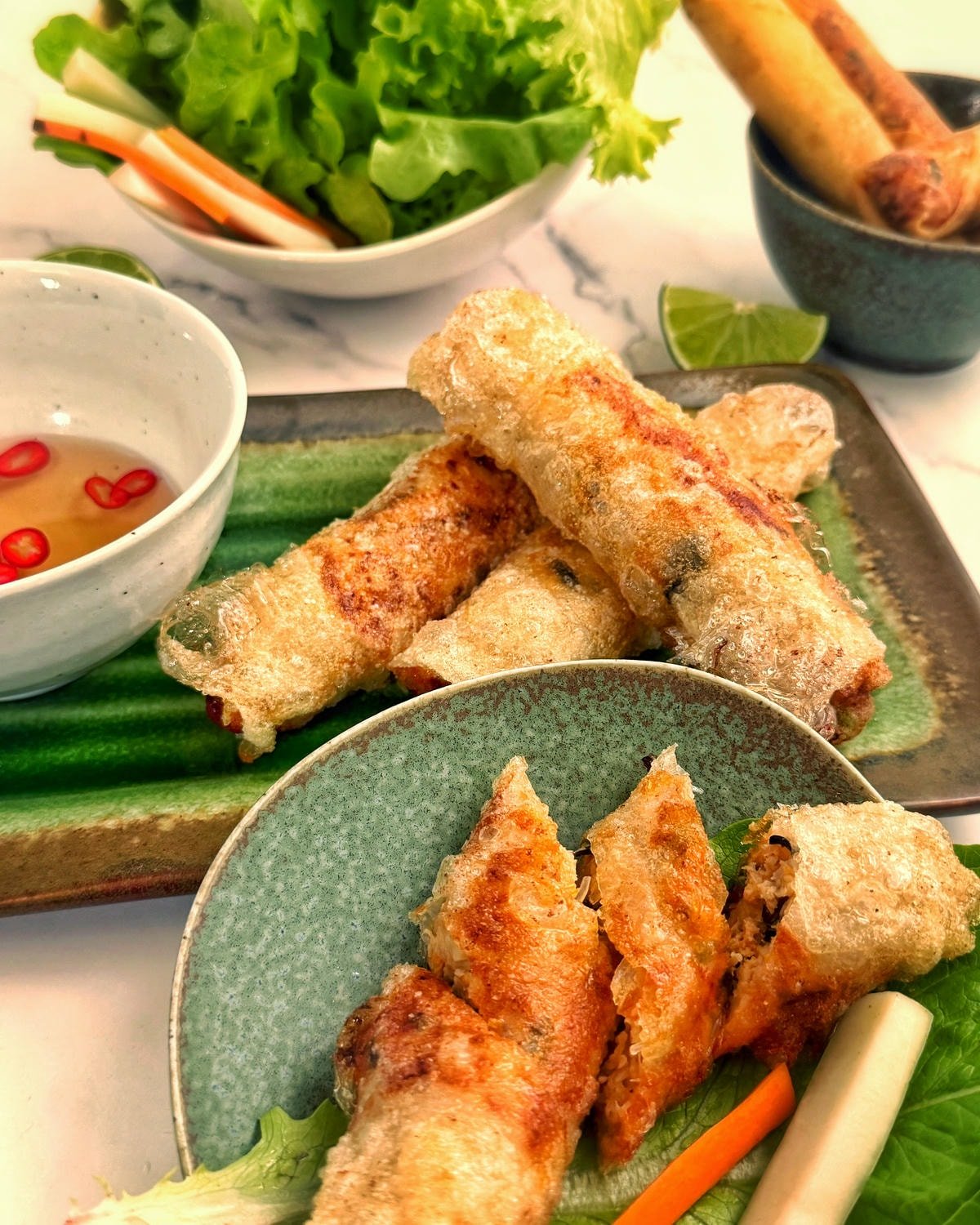
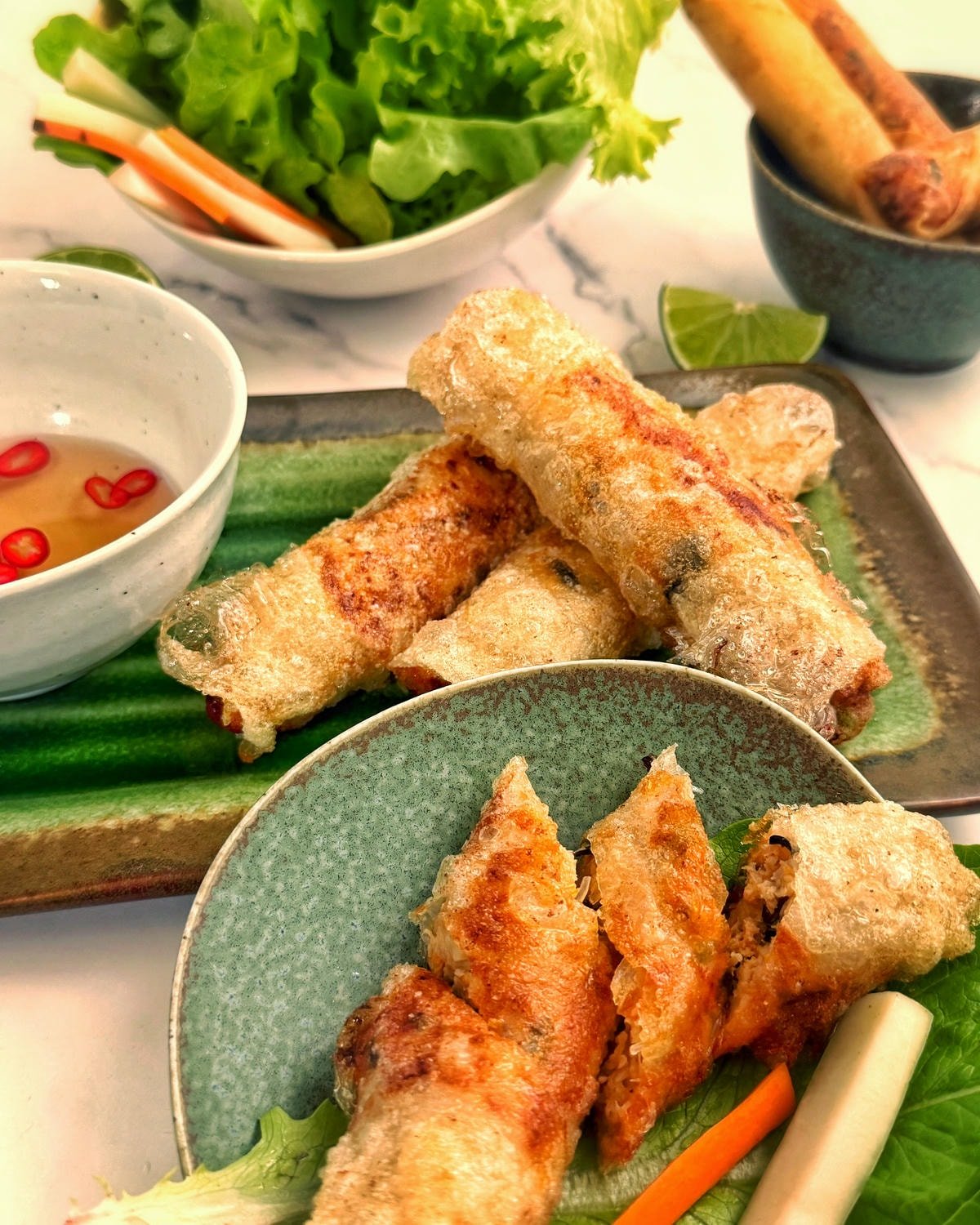
These Vietnamese rice paper spring rolls are ridiculously crispy, packed with juicy pork and prawns, and exactly what I want piled on top of a big Vietnamese vermicelli bowl.
The wrapper is thin and delicate, so when it hits the hot oil it turns into a light, crackly shell around the filling. You get the crunch first, then the savoury pork, prawns, slippery glass noodles and little pops of wood ear mushroom. Dip one into nuoc cham and try to stop at one. You won’t. Nobody does.
Growing up, the spring rolls I knew were always made with wheat or egg wrappers. They were golden, crunchy and very much part of our family dining table. I still love them and make them very often. In fact, my [Better Than Your Takeaway Shop Spring Rolls] are the ones I reach for.
But the first time I had spring rolls made with Vietnamese rice paper, made me wonder why where has this been all my life??
I was visiting my grandma (Bà Ngoại), who lived in a small country town 2 hours from Hanoi, and she made these spring rolls using Vietnamese rice paper instead of egg wrappers I had always grown up with. I remember biting into one straight from the fryer and hearing that proper shattering crunch. The wrapper was so light that I could taste every part of the filling rather than mostly tasting fried pastry. It was crispier, less oily and, honestly, a bit of a revelation. Where had these been all my life?
Back home in Sydney, rice paper spring rolls are surprisingly difficult to find. Vietnamese restaurants everywhere, yes. Vermicelli bowls everywhere, also yes. But most spring rolls are still made with wheat wrappers. So if I want the thin, blistered, extra-crispy rice paper version I remember, I make them at home.
Thankfully, they are absolutely worth the effort.
Why you’ll love these Vietnamese rice paper spring rolls
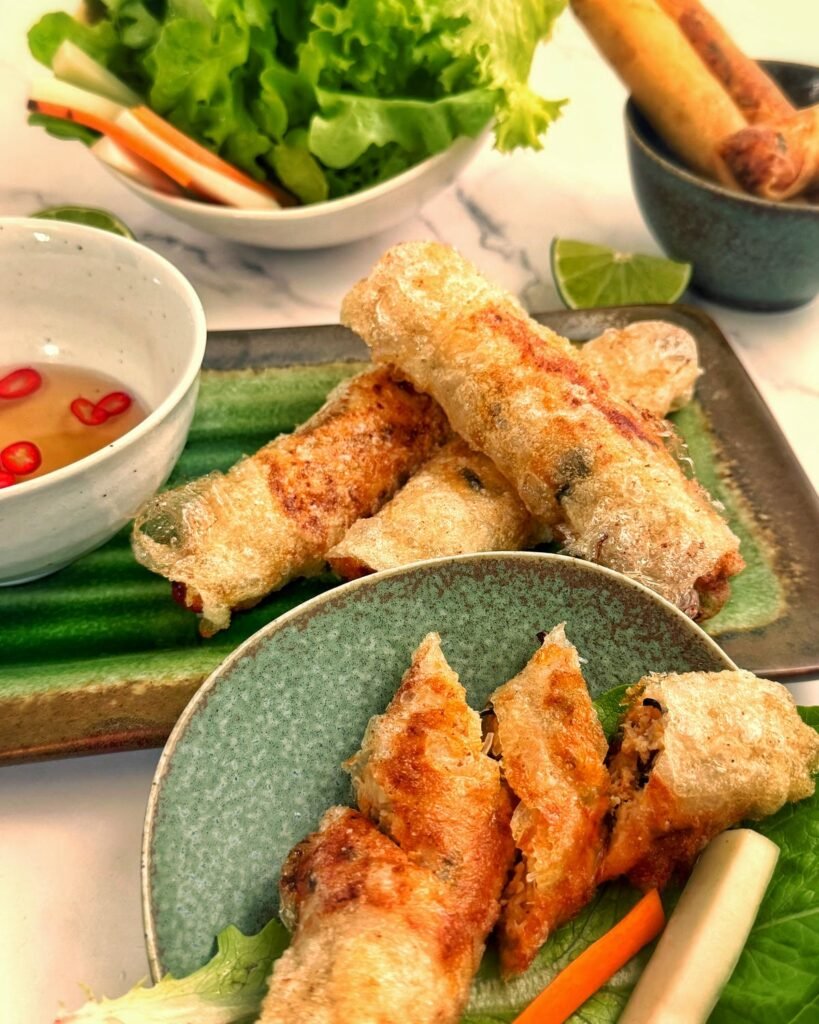
- They are seriously crispy. Rice paper fries into a thin, brittle shell that crackles when you bite into it.
- They taste lighter and less oily. They are still deep-fried spring rolls—we are not pretending they are a salad—but the thin wrapper doesn’t feel as heavy as a wheat wrapper.
- The filling gets to be the star. Because rice paper has a lighter flavour and texture, you really taste the pork, prawns, mushrooms, aromatics and fish sauce.
- They are brilliant in a vermicelli bowl. Cut them into two or three pieces and let the nuoc cham run into all those crispy edges.
Rice paper spring rolls vs egg or wheat wrapper spring rolls
Both versions are delicious. I make both, and I refuse to choose only one because that would be a completely unnecessary hardship.
They do, however, eat quite differently.
| Rice paper spring rolls | Egg or wheat wrapper spring rolls |
|---|---|
| Very thin, brittle and extra-crispy | Crunchy, but with a thicker and more pastry-like shell |
| Light wrapper lets the filling stand out | Wrapper has more flavour and chew of its own |
| Can blister, bubble and look a little rustic | Usually fries into a smoother, more even golden shell |
| Best eaten freshly fried or double-fried | Holds its crunch and shape a little longer |
| Excellent cut over vermicelli noodles | Excellent as finger food or large chevron-cut spring rolls |
For rice paper spring rolls, the filling matters even more. There is nowhere for a dull filling to hide. That is why I use the same pork-and-prawn filling from my takeaway-style spring rolls: rich pork mince, prawns, glass noodles, carrot, wood ear mushrooms and plenty of aromatics. It is savoury, juicy and full of texture without becoming wet or sloppy.
What rice paper should I use for frying?
Look for thin Vietnamese rice paper sheets rather than egg or wheat-based spring roll pastry. Be aware however, not all rice paper brands are made the same. Every brand performs slightly differently, some soften faster than others, some are thicker therefore break tare harder to tare, some are dimensionally smaller than others.
Personally I wouldn’t worry about seeking out the perfect rice paper sheets, buy whichever one you can get your hands on from your Asian grocery store and they will do just fine. After making a couple you will understand how the rice paper behaves after being wet and trust yourself that you’ll automatically make adjustments accordingly (ie. dunk it in water for less time, letting the rice paper sit for a few more seconds before rolling, etc).
Having said that, if you can choose, buy the larger rice paper instead of the miniature ones. We don’t want finger food style spring rolls.
Ingredients you’ll need
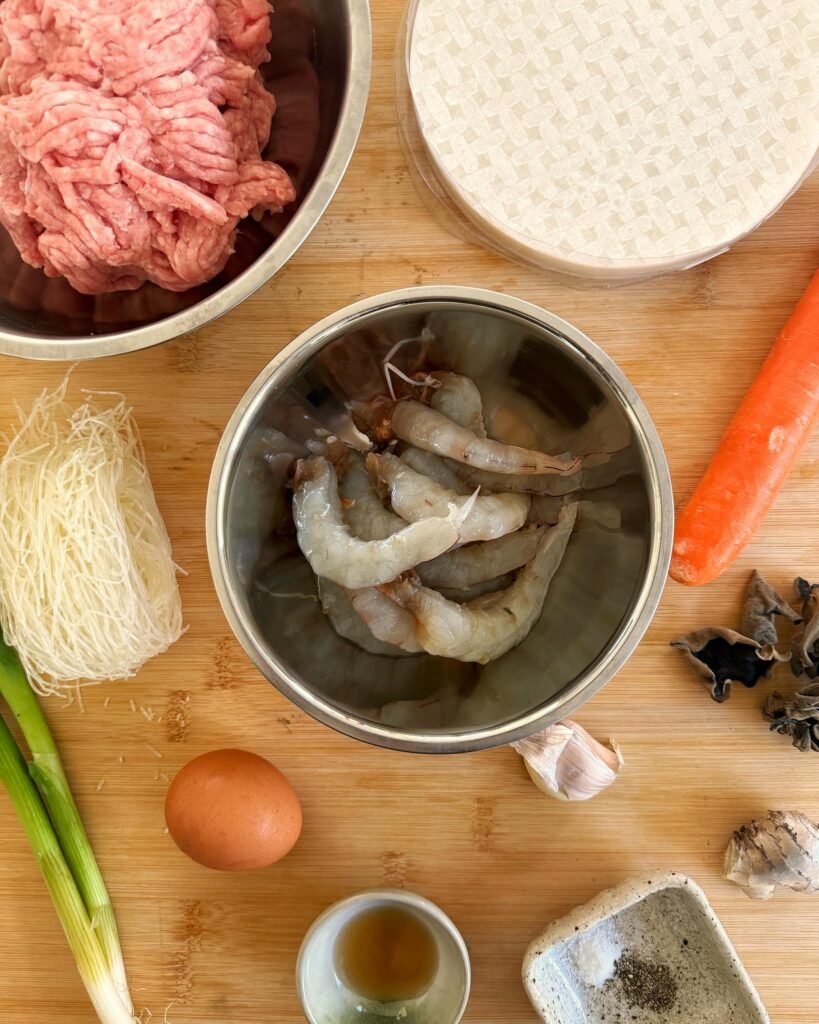
Pork mince
Pork mince gives the filling richness and keeps it juicy. I use regular pork mince rather than extra-lean mince because a little fat carries all that garlic, ginger and fish-sauce flavour.
This is a spring roll. It is being deep-fried. Let’s not pretend this is a salad.
Prawns
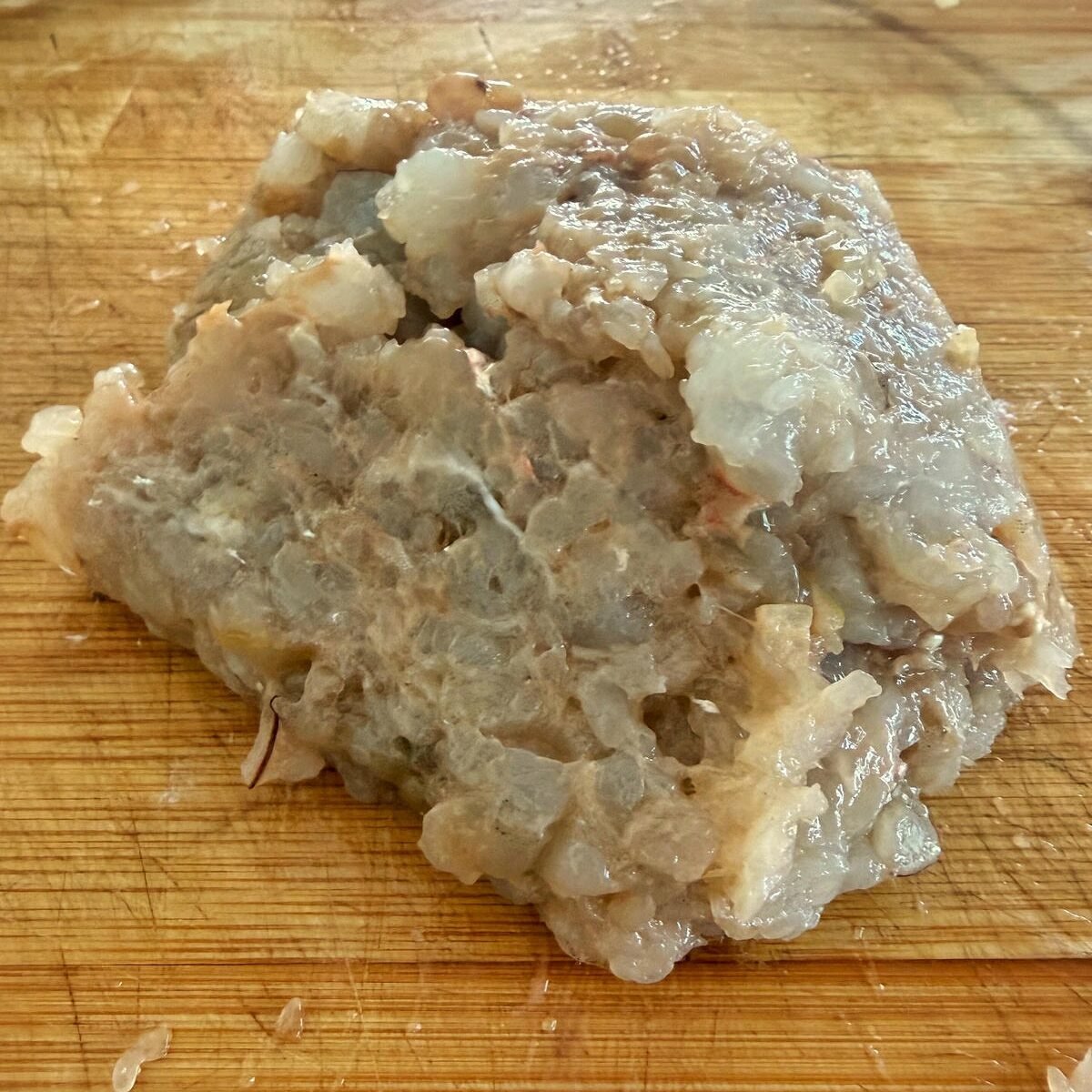
Prawns and pork are a match made in heaven. The flavour combination is perfect for a spring roll.
I chop them by hand rather than putting them into a food processor. I like finding little pieces of prawn throughout the filling. If you blend them completely, you lose that texture and end up with seafood glue.
The prawns can be slimy to chop if you’re using the traditional knife rocking method. Grab your cleaver and go to town on these prawns so they don’t slip away.
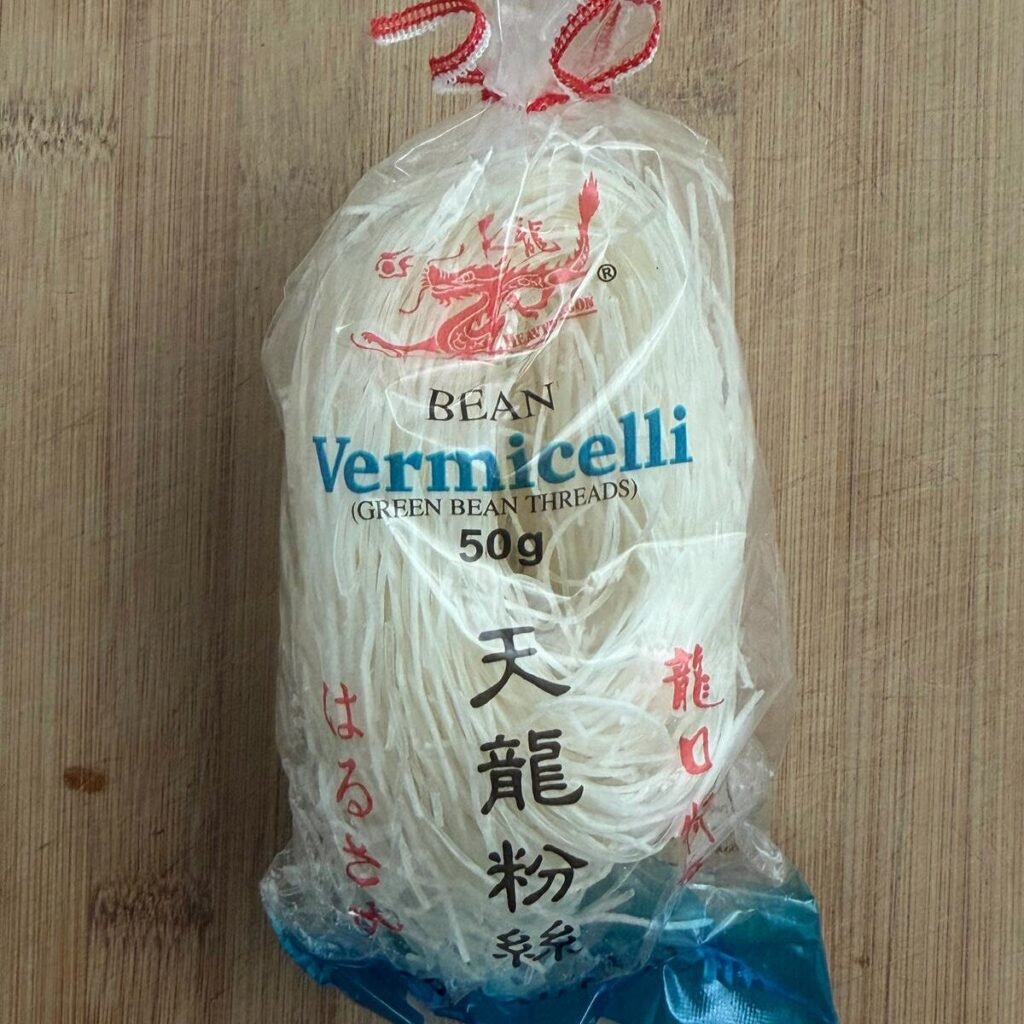
Bean-thread glass noodles
Glass noodles soak up the juices from the pork and prawns while giving the filling a light, springy texture.
I soak them until flexible, drain them well and use kitchen scissors to cut them into short pieces. Approximately 1-2cm long. Don’t cut them too short or fine.
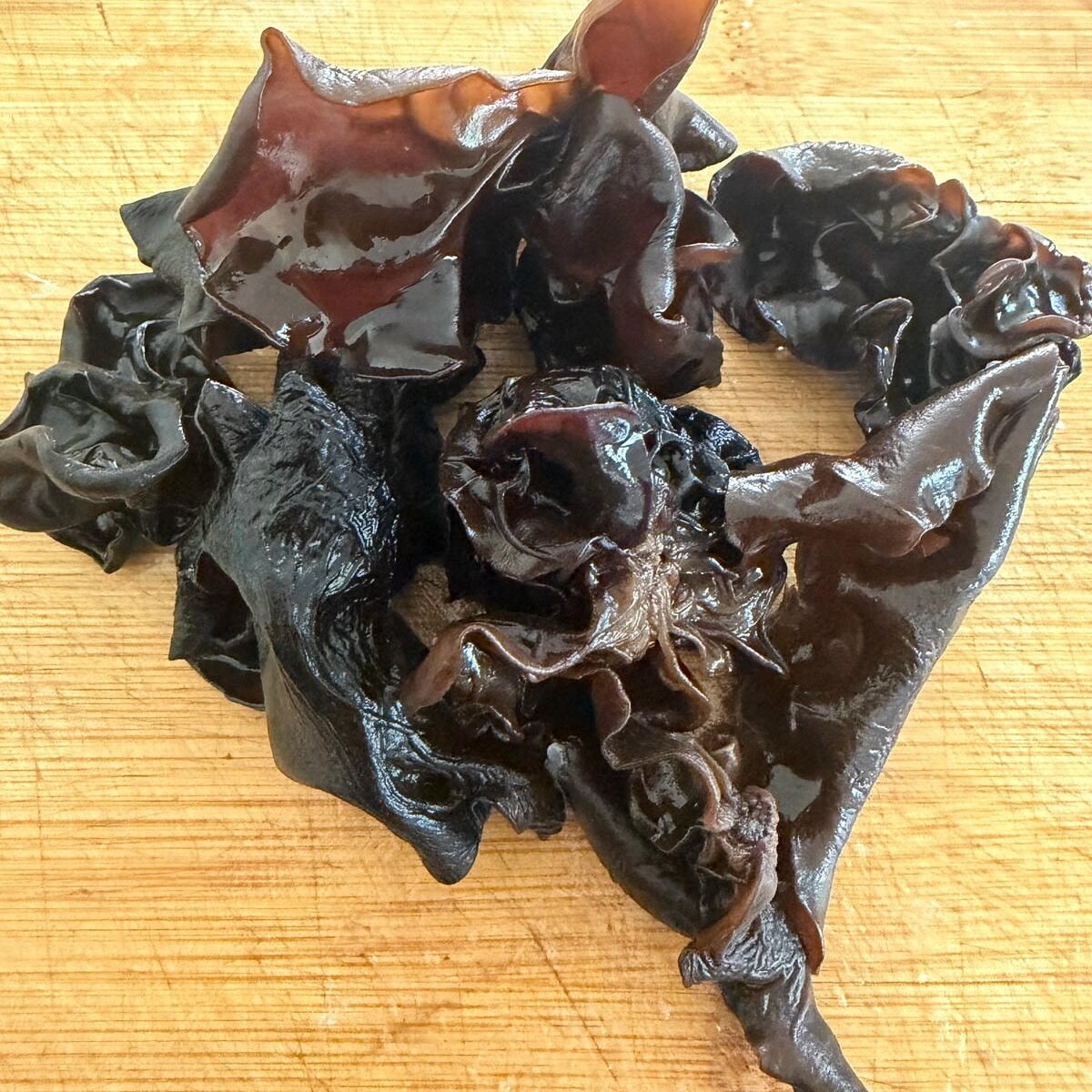
Dried black fungus
Dried black fungus, also called wood ear mushroom, adds the crunch to the filling without giving the filling a strong mushroom flavour. They may look and sound weird, but definitely don’t skip these. You can buy these dried from your local Asian grocery store.
Soak it in warm water until fully expanded, trim away any hard sections and chop it finely.
Garlic, ginger, onion, spring onion and fish sauce
Garlic, ginger, onion, spring onion and fish sauce give the filling its savoury flavour.
I keep the seasoning relatively simple because the pork and prawns should still taste like pork and prawns. The fish sauce brings eve
My biggest tip: cook a tester first
Before rolling 30 spring rolls, fry a teaspoon of filling in a small pan and taste it.
This takes about two minutes and can save an entire batch from being under-seasoned. Pork mince, prawn sizes and fish sauce brands all vary, so the filling may need another splash of fish sauce or a pinch more pepper. Once the filling goes inside the wrappers, the committee meeting is over.
How to roll rice paper spring rolls without tearing them
Rice paper is more delicate than a wheat wrapper, but it is not difficult once you get into a rhythm.
- Set up before you start. Have the filling, rice paper, a shallow dish of lukewarm (not boiling) water and a lightly oiled tray ready.
- Wet the wrapper very lightly. Quickly dip the rice paper into the water, or rotate it through the water so the whole sheet is just moistened. It may still feel firm when you remove it. That is fine. You do not want to wait until it soft and floppy otherwise it will be as cooperative as my 4 year toddler in the mornings.
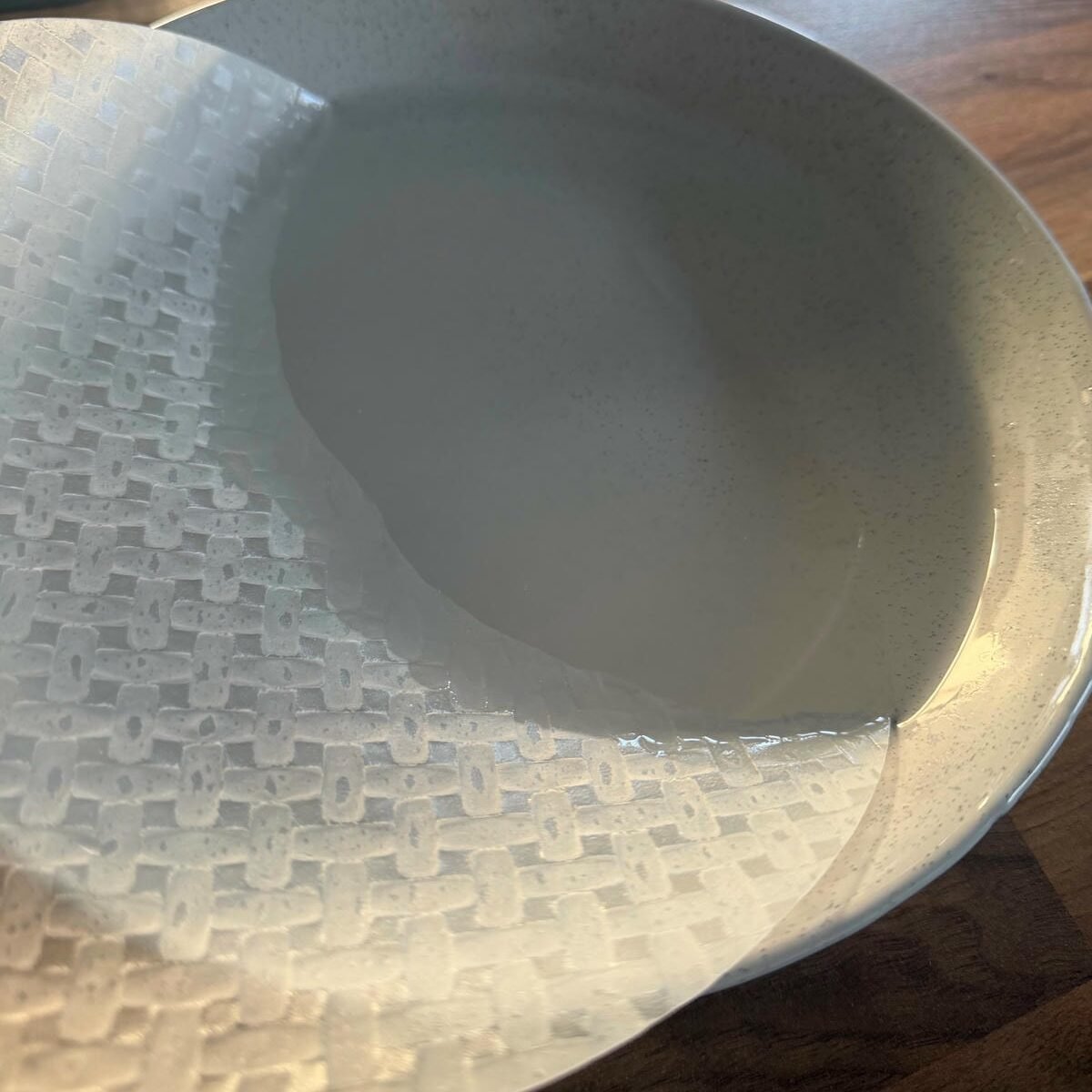
- Wait a few seconds. Place it on a clean board and let it soften. It may take anywhere between 5 to 30 seconds to soften depending on the brand.
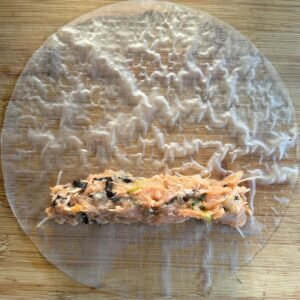
- Add the filling. Place a compact log of filling near the bottom third of the wrapper. About one heaped tablespoon is enough for medium spring rolls.
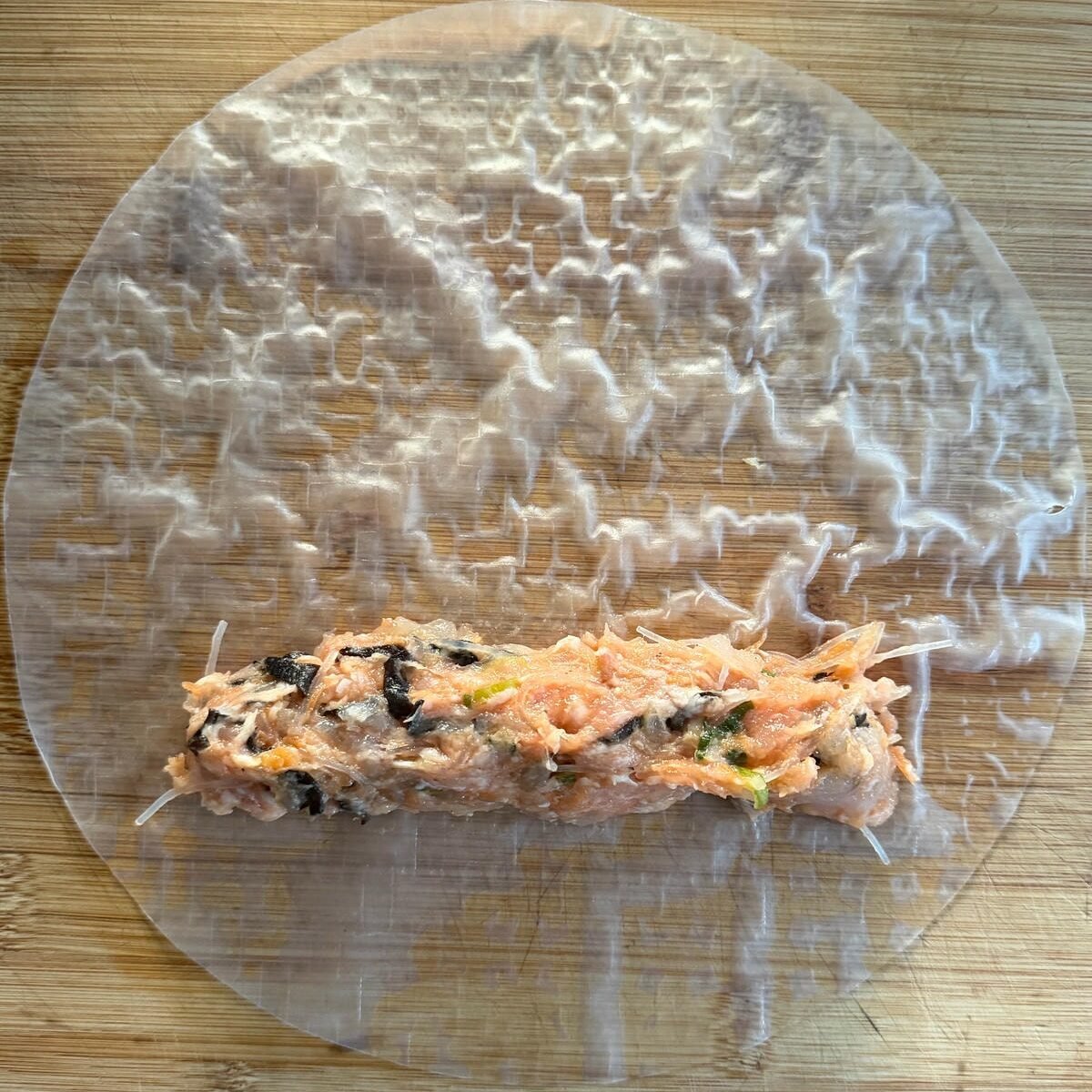
- Roll firmly, but not brutally. Fold the bottom over the filling, fold both sides in, then roll towards the top. Keep the shape snug without squeezing so hard that the wrapper tears.
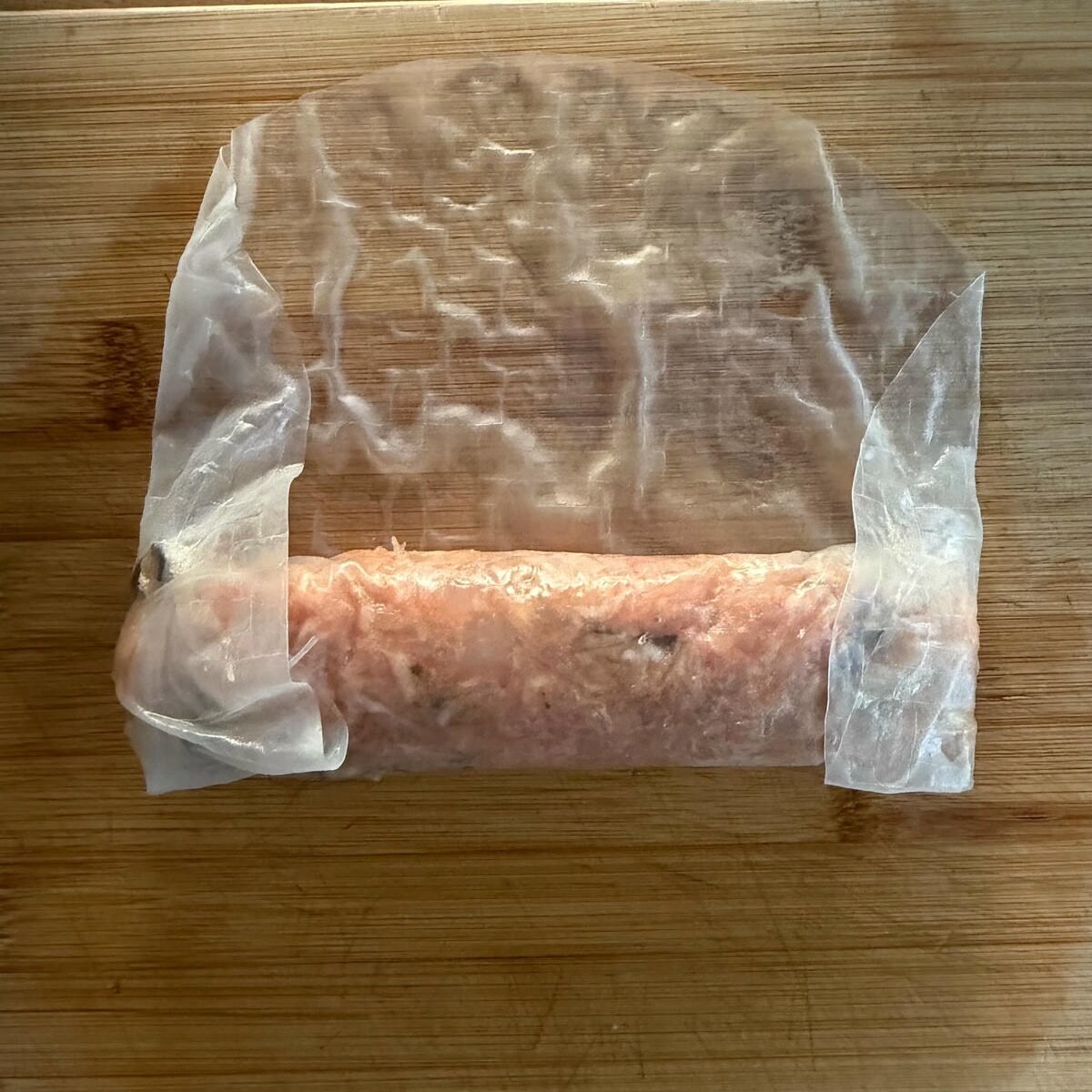
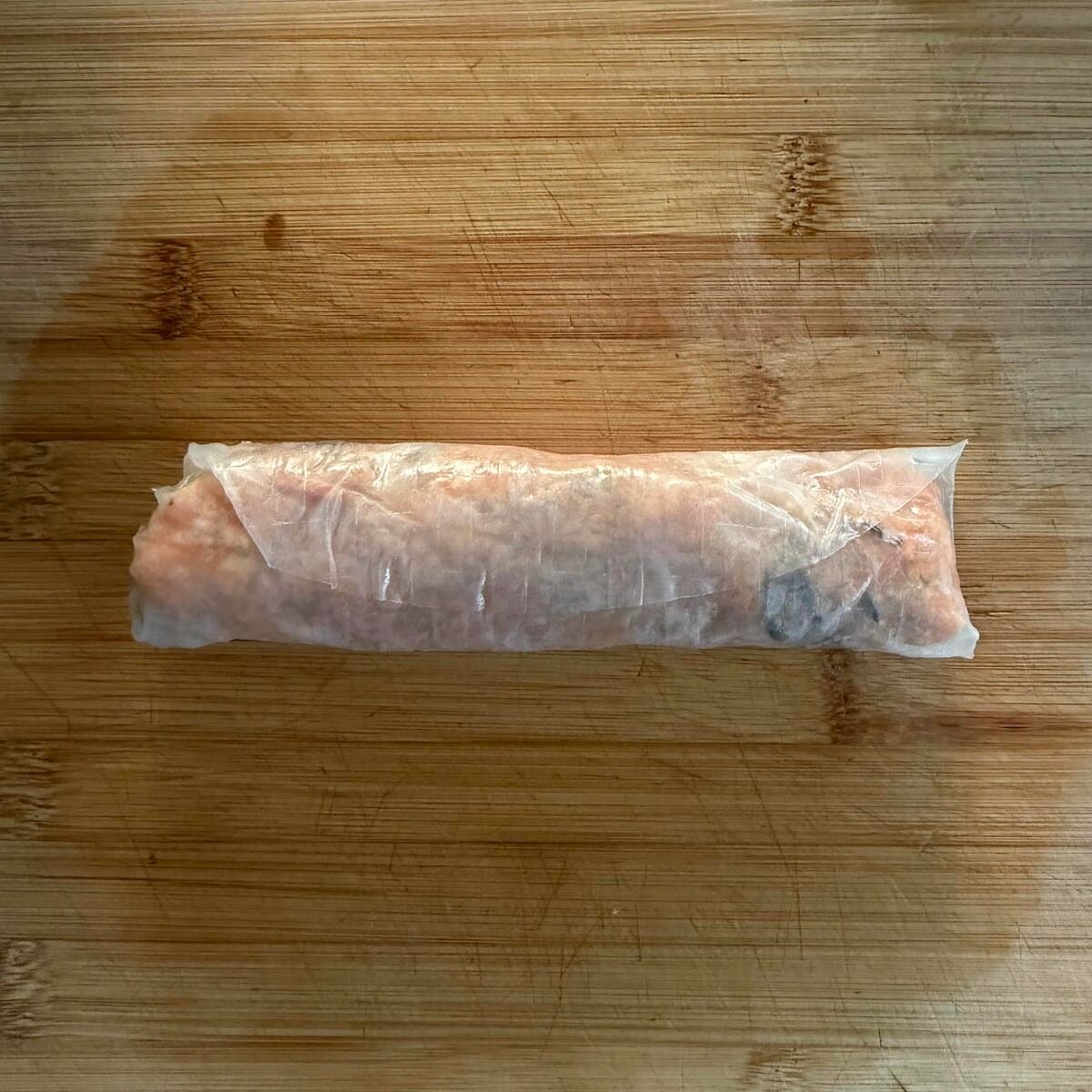
- Give them some personal space. Place the finished rolls seam-side down on the oiled tray without letting them touch. Damp rice paper sticks to other damp rice paper with the commitment of industrial glue.
Double-frying gives the best crunch
You can fry these once and eat them straight away, but double-frying gives you that louder, longer-lasting crunch that works so well in a vermicelli bowl.
The first fry cooks the filling and sets the wrapper. Keep the oil at a moderate temperature so the outside does not darken before the pork and prawns are cooked. Let the spring rolls rest while you fry the remaining batches.
Then increase the oil temperature and fry them again briefly. The second fry drives off extra moisture and turns the rice paper beautifully crisp and blistered.
Yes, it is an extra step. It is also the difference between “nice spring roll” and everyone hovering beside the plate waiting for the next batch.
How to serve them in a Vietnamese vermicelli bowl
Vermicelli bowls
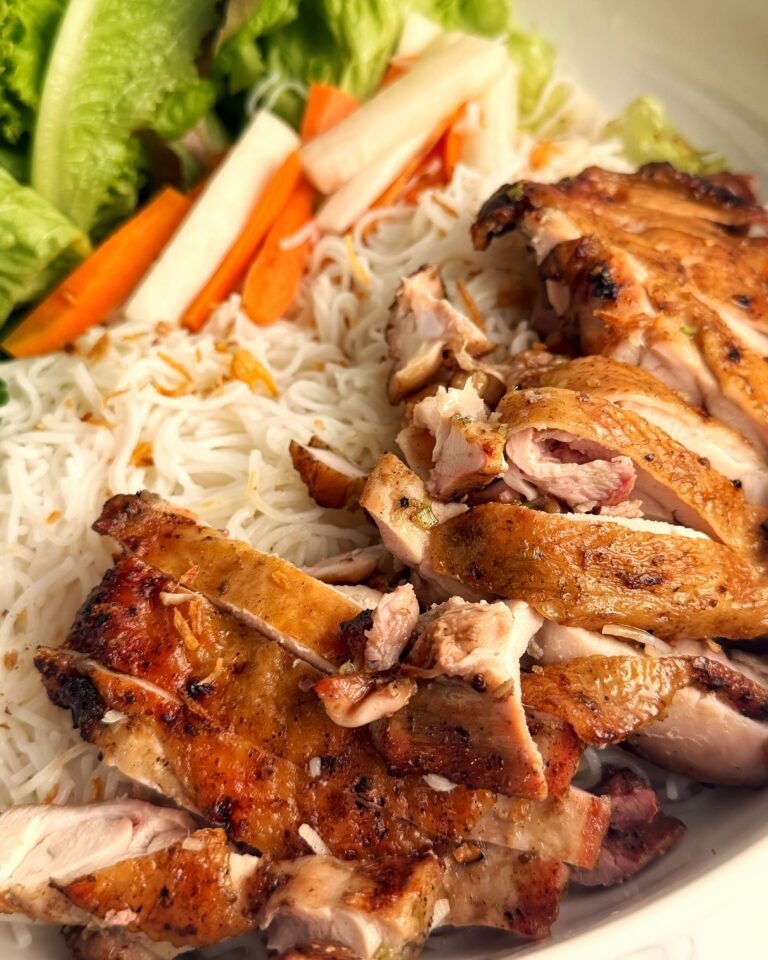
Rice paper springs rolls are perfect for Vietnamese vermicelli noodle bowls.
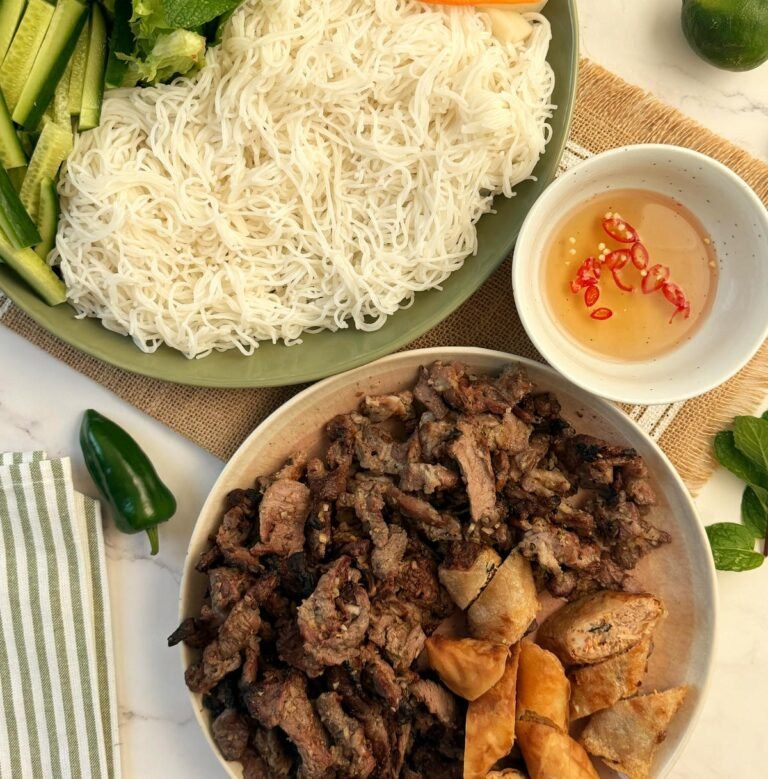
Once they are cooked, I cut each spring roll diagonally into two or three chevrons. I love the way the golden pointed pieces look piled over the noodles—and the exposed filling soaks up the nuoc cham beautifully.
I build each bowl with:
- A generous handful of cooked vermicelli noodles
- Shredded lettuce and sliced cucumber
- Plenty of mint, coriander and Thai basil
- Pickled vegetables, if we have them
- Sliced spring-roll chevrons
- A very generous spoonful of nuoc cham
Sometimes I assemble the bowls before bringing them to the table. More often, I put everything on large platters and let our family build their own.
It is easier, the salad stays crisp and nobody can complain that someone else received more spring rolls. If your bowl has fewer spring rolls, that is now entirely your own fault.
These are also fantastic served alongside lemongrass grilled pork in a Vietnamese vermicelli bowl. Grilled pork and spring rolls may sound excessive, but I have never looked at that combination and thought, “This meal would be better with less delicious food.”
Wrapped in lettuce
This sound too simple to be good. But trust me, wrap one of these bad boys in lettuce, with a slice of pickled daikon or carrot, dipped in nouc cham makes a perfect mouthful of flavour.
[Pre-make these pickled daikon and carrot today for the next time you fry up fry up some spring rolls.]
Ingredients
Spring spring rolls
- 500 g pork mince
- 300 g prawns peeled and deveined
- 20 g dried wood ear/black fungus mushrooms
- 50 g dried bean-thread glass noodles
- 1 medium carrot peeled and grated
- 1 small brown onion finely diced
- 3 spring onion finely chopped
- 2 clove garlic minced
- 20 g ginger (fresh) grated
- 2 tbps fish sauce
- 1 medium egg
- 1/2 tps salt
- 1/2 tps pepper
- 10 Vietnamese rice paper sheets
- neutral oil for frying
Instructions
- Prepare the noodlesPlace the 50 g dried bean-thread glass noodles in a bowl and cover them with warm water. Leave them for approximately 10 minutes, or until flexible but not completely soft. Drain them thoroughly, then use kitchen scissors to cut them into pieces around 1-2cm long.
- Prepare the mushroomsIn a separate bowl, soak the 20 g dried wood ear/black fungus mushrooms in warm water for 15–20 minutes, or until fully expanded. Drain it, trim away any hard centres and chop it finely. I make sure both the noodles and mushrooms are properly drained before adding them to the filling. Wet ingredients create wet filling, and wet filling creates soggy wrappers. Nobody has ever gathered excitedly around a plate of soggy spring rolls.
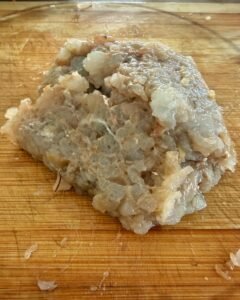
- Chop the prawnsPat the 300 g prawns dry with paper towel, then chop them into small pieces. Chop them fine enough to mix evenly through the pork but still large enough that we can taste little pieces of prawn in the finished spring rolls.
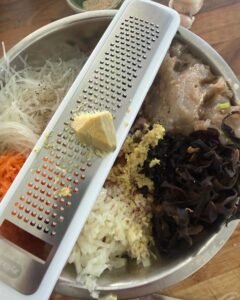
- Chop and mince remaining ingredientsPeel and grate 1 medium carrot, finely chop 1 small brown onion, chop 3 spring onion, mince 2 clove garlic, grate 20 g ginger (fresh).
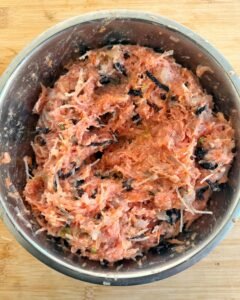
- Mix the filling in a bowl and add seasoningAdd all the ingredients along with 500 g pork mince into a bowl, crack 1 medium egg into the bowl and mix as thoroughly as possible. Add 2 tbps fish sauce, 1/2 tps salt, 1/2 tps pepper. Use your hands and scoop the mixture from the bottom of the bowl and bring it to the top, and ocassionally squeeze the mixture through your fingers to ensure the seasoning is evenly distributed.
- Wet the rice paperGive a sheet of rice paper a quick dunk into some luke warm water and transfer it over to a plate or a board quickly before it gets soft. Let it sit for 5-30 seconds to soften
- Roll the spring rollsAdd 1 heaped tablespoon of the filling mixture a third way down the rice paper. Don't over fill it, you will get a feel for how much after you have made a couple. Tightly roll the rice paper around the filling until you get to the halfway up then fold in the side and continue rolling upwards until you get a nice round spring roll.
- Heat the oilUsing a wok, dutch oven or a heavy bottomed pot, power enough oil to cover the spring rolls. Heat the oil to 165-170c. Either use a thermometer or use the chop stick test. Stick the tip of a WOODEN chopstick into the oil and if it starts to bubble within 2 seconds then the oil is hot enough.
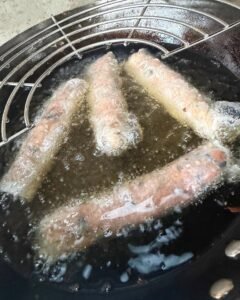
- Deep fry spring rollsFry the spring rolls in batch so the oil temperature does not drop too much. This is particularly important for rice paper spring rolls because they will blister the second they hit the hot oil and they have the tendency to stick to one another during the frying process, therefore you want to give them plenty of space to bluster and bubble. I usually fry 4 spring rolls at a time. They will take around 7-9 minutes to cook through and become crispy. Drain on a rack and let them cool slightly before enjoying!