Vietnamese Pickled Carrot and Daikon (Đồ Chua)
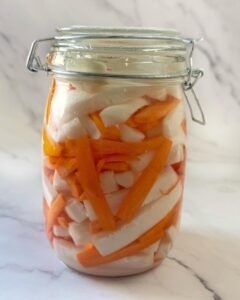
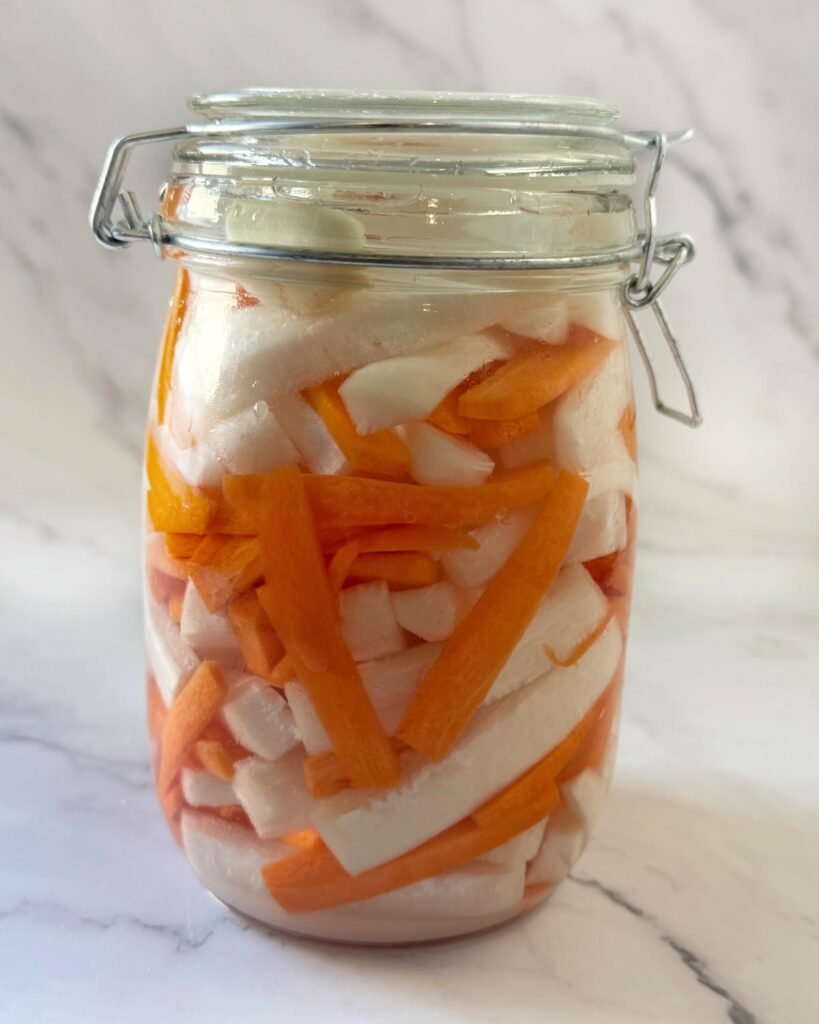
Vietnamese pickled carrot and daikon can be easily overlooked but has the pivotal role of providing balance, crunch and sweetness with a little sour to a dish like a Vietnamese vermicelli noodle bowl.
On its own, a vermicelli bowl can already be very good: smoky grilled meat, soft noodles, fresh herbs and plenty of nước chấm. Add a pile of cold, sweet-and-sour Đồ Chua and suddenly every mouthful has contrast and crunch. It cuts through the rich meat, sharpens up the herbs and gives the noodles a proper crunch. This is why I never treat it as a decorative garnish. I add a generous pile.
Thankfully, it is also ridiculously easy to make. Carrot. Daikon. Sugar. Water. Vinegar. That is the whole shopping list. There is no fermenting crock, no mysterious powder and no jar bubbling in the corner of the kitchen.
Make it ahead, keep it cold and bring the jar to the table with any dish with mean. And in our household, it’s every single dish. This is the only sort of vegetable that my eldest son eats an unhealthy amount of.
What does Đồ Chua mean?
Fun fact; Đồ Chua literally translates to “sour stuff.” Đồ means things or stuff, while chua means sour. I don’t think people will get that confused…
In this recipe, Đồ Chua refers to carrot and daikon soaked in a sweet vinegar brine. It is crisp, refreshing and noticeably tangy, but it should never be so sour that your whole face folds in on itself. The sugar matters just as much as the vinegar.
The sweet-and-sour ratio
My easy starting ratio is:
- 1 part white vinegar
- 1 part water
- 1/2 part white sugar
For one household-sized jar, that means 250 ml white vinegar, 250 ml water and 125 g sugar.
Different Vietnamese families and shops make their Đồ Chua differently. Some like it sweeter, some like it punchier and some could probably strip paint with theirs. I prefer enough sugar to soften the vinegar while keeping the pickle fresh and tangy.
Taste the cooled brine before adding it to the vegetables. It should be distinctly sweet and sour, because the vegetables will mellow it slightly. If your vinegar is especially sharp, add another spoonful of sugar. If you prefer more tang, add a small splash of vinegar. This is dinner, not a chemistry exam.
Grated, matchsticks or thick batons?
How you cut the vegetables changes both the texture and how quickly they pickle.
Grated or very finely shredded
Thinly grated carrot and daikon soften quickly and soak up plenty of brine. They are lightly crunchy rather than seriously crisp, and every little strand carries that sweet-and-sour flavour.
You can eat finely grated Đồ Chua after about 30 minutes, although I think it is much better after 2 hours in the fridge. I use the grater when we have run out of Đồ Chua in the fridge and I need some fast ready for dinner.
Thick matchsticks or batons
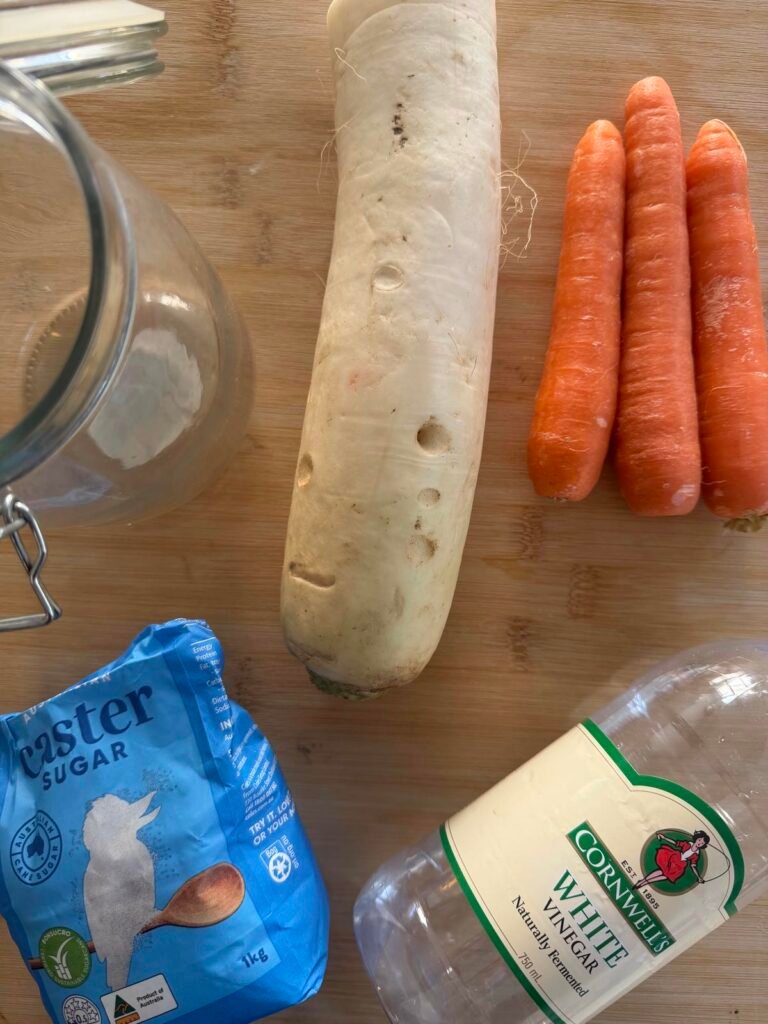
This is my personal favourite way cutting the carrots and daikon. And my boy’s favourite too. It has the most crunch but it does take a little longer for the flavours to develop. However, all good things come to those that wait right?
I cut these about 5 – 7mm thick and about 4cm long. I used them as part of a vermicelli bowl, in a banh mi or even eaten as a snack straight from the jar!
Give thick-cut Đồ Chua at least 12 hours. It gets better after 2 to 3 days.
Thin matchsticks
The in-between cut. They keep a satisfying crunch but are still thin enough to grab with a mouthful of noodles. Use them for vermicelli bowls, bánh mì, rice bowls and family-style platters.
They will be ready after 2 hours, but overnight is ideal.
What to eat with Đồ Chua
The short answer is: anything rich, grilled, fried or piled onto noodles.
For this Vietnamese vermicelli recipe cluster, add it to my Vietnamese Vermicelli Bowl with:
- Lemongrass Grilled Chicken
- Bún Thịt Nướng with Grilled Pork
- Better Than Takeaway Spring Rolls
- Vietnamese Rice Paper Spring Rolls
- plenty of fresh herbs, cucumber and Nước Chấm
There are sooooo many things that these can be eaten with. With a jar in the fridge, I always take out a couple sticks of Đồ Chua and have a bite with whatever I’m having for dinner. And more often than not, it works. Just to name a few:
- Sandwiches (the obvious one is bánh mì, but Đồ Chua is great with any sandwiches that has a respectable amount of meat)
- Grilled pork chops
- Fried chicken
- and the list goes on….
When we have alot of people around the for dinner, I like to drain our the liquid and plonk a bowl of Đồ Chua next to the platter of meat. Everyone naturally knows what to do with it.
How long does Đồ Chua keep?
Keep the jar refrigerated with the vegetables covered by brine. For the best crunch and fresh flavour, I like to use it within 3 to 4 weeks.
It may remain pickled beyond that, but the vegetables gradually soften and the flavour becomes stronger.
Salt the daikon and carrots
After slicing the carrots and daikon, I like to add salt to the mixture and let it sit for 20 minutes to draw out any excess moisture from the carrots and daikon. This will help it stay crunchy while being pickled in the jar.
After 20 minutes, you can see how much liquid has been drawn out from the daikon and carrots.
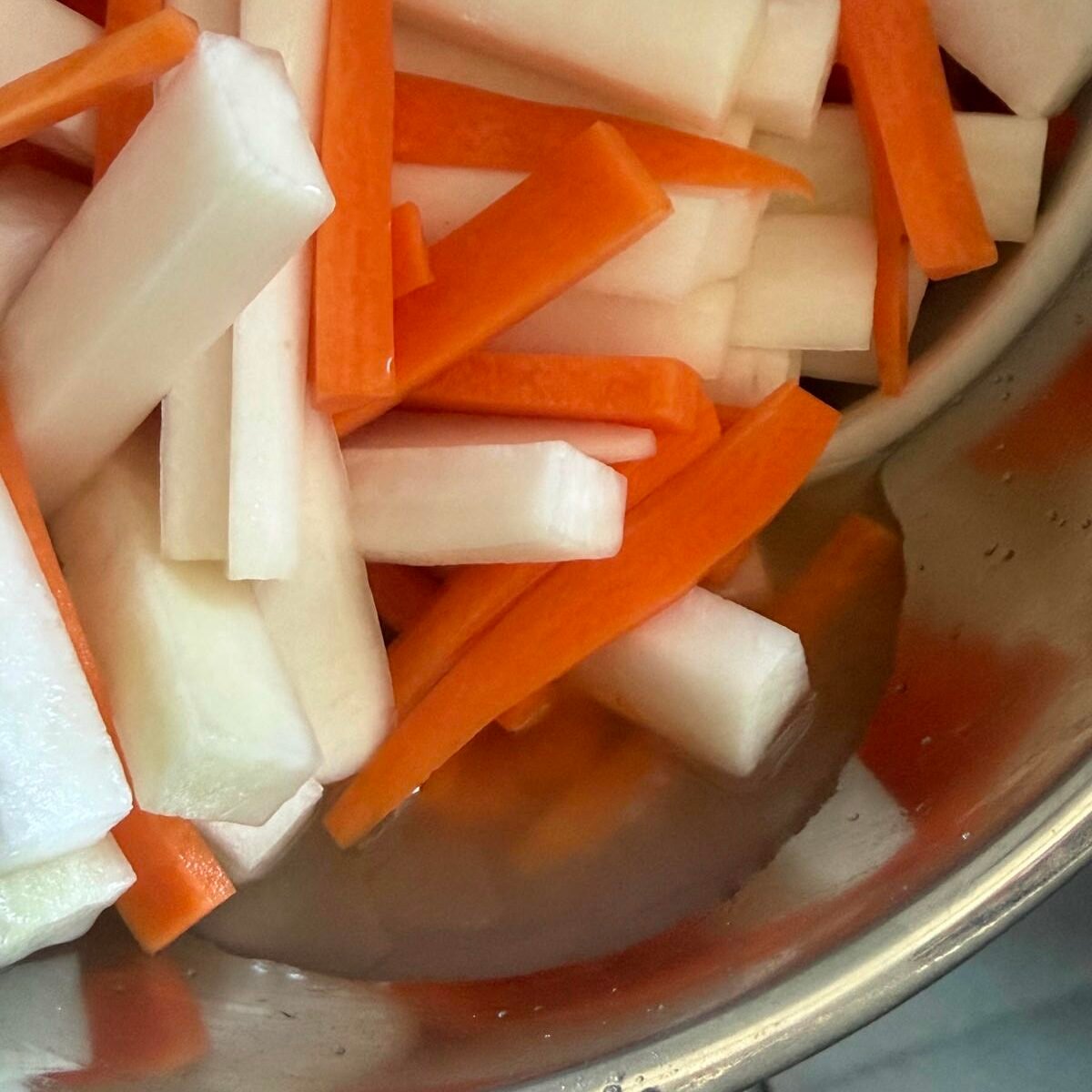
Drain off the liquid and make sure to rinse the carrots and daikon in water before pickling. You don’t want all that excess salt. Don’t worry, washing it with water will not add water back into the carrots and daikon.
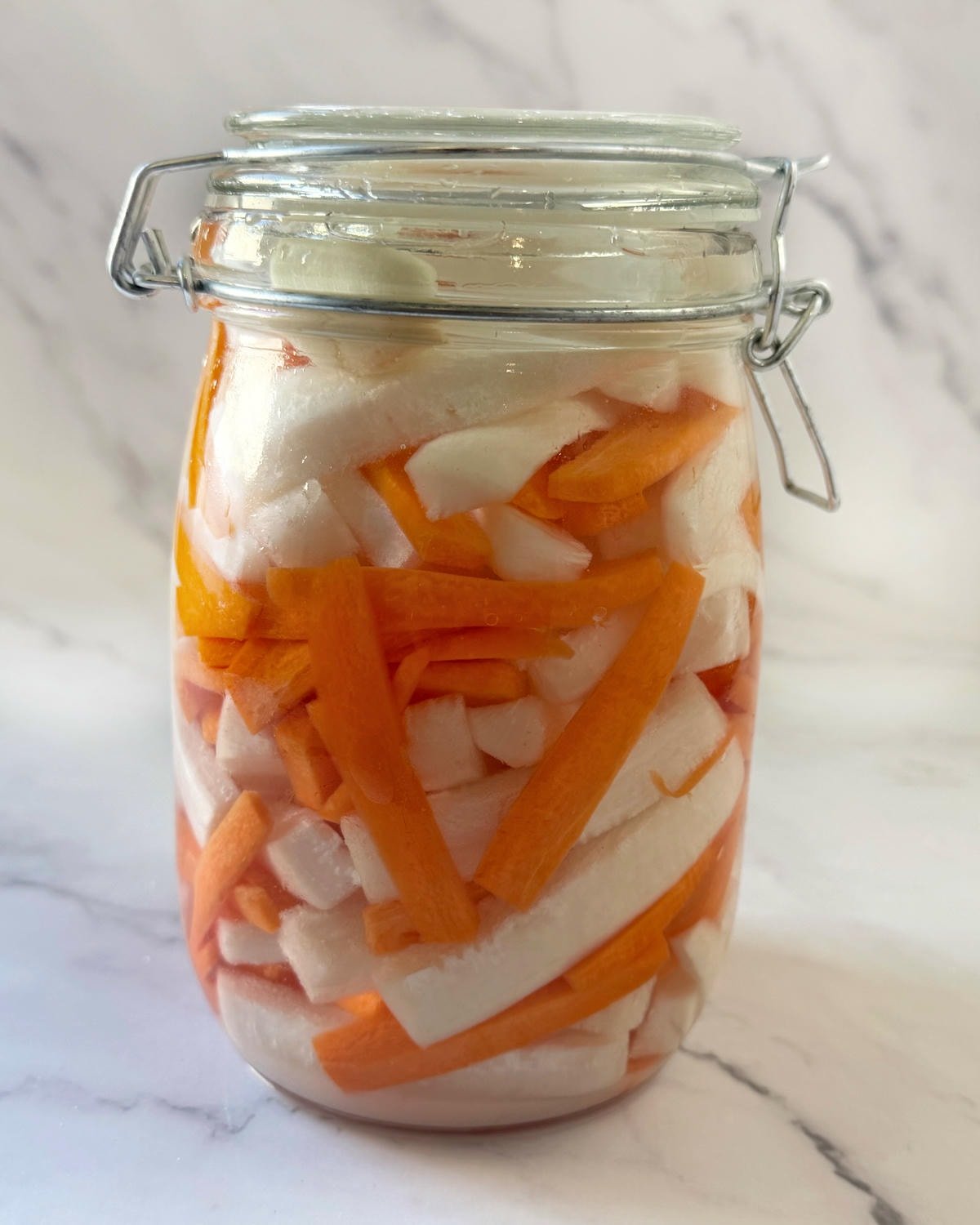
Ingredients
- 1 small daikon (about 500g)
- 2 medium carrots (about 250g each)
- 125 g white sugar
- 250 ml white vinegar
- 250 ml warm water
- 2 tbsp salt
Instructions
- Wash the jar. Wash a 1 litre jar (or 2 500ml jars and lid thoroughly with hot soapy water, then rinse and dry them well.
- Cut the carrot and daikon. Peel and cut the carrot and daikon to your preferred thickness.
- Add salt. Add 2 table spoons of salt to the carrot and daikon mixture in a mixing bowl (this may seem like alot of salt, but don't worry we will be washing the salt off). Thoroughly mix the salt through the carrot and daikon. Let it sit for 20 minutes to draw out any excess moisture
- Rinse. After 20 minutes, drain out the liquid from the bottom of the bowl and rinse carrot and daikon under water to get rid of the saltyness.
- Make pickling liquid. Combine the sugar and warm water in a jug (or measuring jug) and stir until the sugar has completely dissolved. Add the white vinegar and stir again. Use warm rather than boiling water.
- Fill the jar. Place the carrot and daikon into the jar then fill it with the picking liquid. Ensuring the liquid covers the carrots and daikon. If you're running short, add equal parts of water and vinegar as a top up.
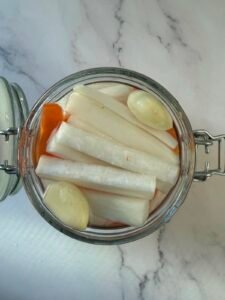
- Chill. You and the pickle jar. Leave the pickle jar in the fridge ready for your next Vietamese feast.