
Super Easy Lamb Ragu Recipe
Give me a big bowl of pasta covered in rich, slow-cooked lamb ragu and I am a very happy man. The lamb falls apart at the touch of a fork, the tomato sauce is thick and deeply savoury, and those little bits of meat find their way into every fold and hollow of the pasta.
I love piling the whole lot onto a big serving platter in the middle of the table, with a crisp leafy salad and honey vinaigrette alongside it. Put out the serving spoons, call everyone over and let them dig in. This is a family meal! I let the family help themselves piling as much onto their plate as they want. After making everyone smell this cooking all afternoon, it’s only fair.

Ragu was the first proper Italian recipe I learnt to cook when I moved out on my own at 20. An Italian mum I worked with taught me how to make it, and she even bought me a lasagne dish as a housewarming gift. Looking back, is a pretty excellent way to make sure a newly independent 20-year-old eats something decent.
Now, before you see the cooking time and close the page, stay with me! Yes, this is a four-hour-plus situation, but you are absolutely not spending four hours working at the stove. You do a bit of chopping and browning, put the lid on and let the oven get on with it. Three and a half hours later, that lamb should be ready to fall apart in a puddle of rich, herby tomato sauce. Your main job in between is resisting the urge to check whether dinner has somehow cooked faster since you last looked.
I especially love making this when we have friends over because the entire house smells of hungry. I know that’s not technically a smell, but lift the lid on lamb ragu that’s been blipping away with tomato, garlic and rosemary for a few hours and tell me I’m wrong. It’s warm, meaty and herby, and suddenly everyone is very interested in what’s happening in the kitchen. Fair enough. So am I.
Why you’ll love this recipe
- So much flavour from such an ordinary shopping list. Lamb, passata, onion, garlic, a carrot, a stock cube and a few herbs. That’s the backbone of this whole glorious pot of dinner (or lunch). Most of it is probably already on your shopping list, and those woody herbs hanging around waiting for a purpose? This is their moment.

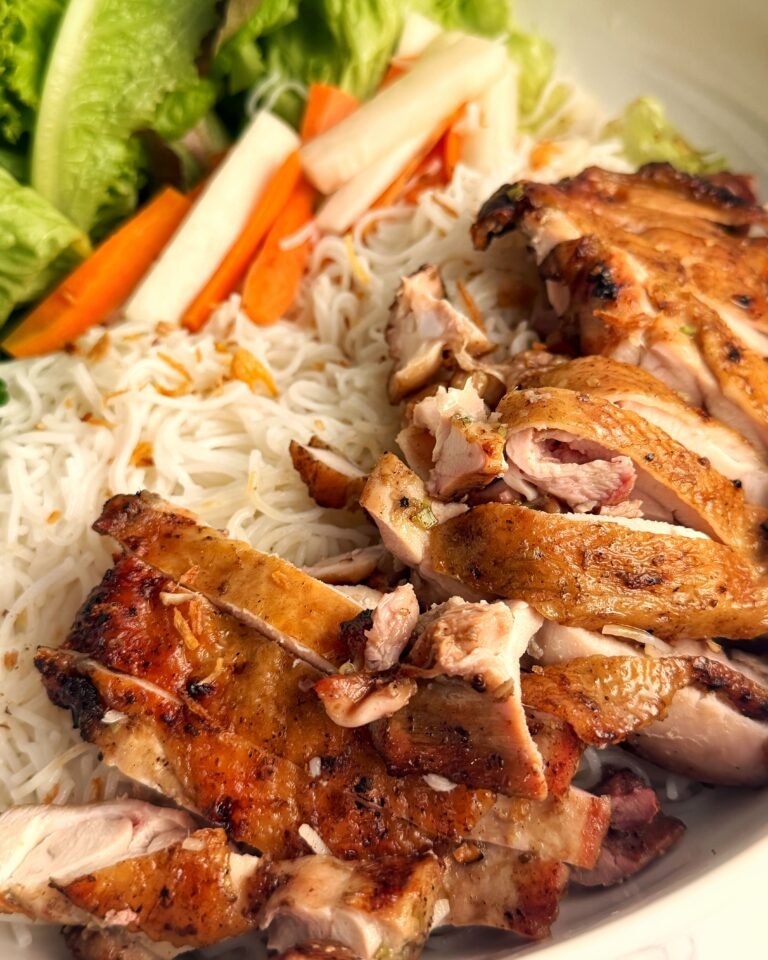
- The oven does the heavy lifting. Give the lamb some attention when you brown it, then let the long, slow cook do its thing. Apart from a halfway check, you’re free to get on with your afternoon. This is brilliant when friends are coming over because I prefer to to be talking and drinking beer (I’ll be honest, most the drinking beer part) than to be standing stirring a pot.
- It turns a good bargain into a seriously good dinner. Find some lamb shoulder or leg on sale and you’re halfway there. The meat softens, the tomato cooks down and all those browned bits from the pot melt into the sauce. By the time it’s ready, you’ve got deep, savoury flavour in every spoonful. I get very excited about dinners that taste this good without needing expensive ingredients.
- It’s made for a table full of hungry people. One big platter of pasta, a bowl of crisp salad and everyone serving themselves. That’s how I love eating with our family and friends. You choose how much you want, pass the platter along and settle in for a proper catch-up over something delicious. Nobody needs me standing in the kitchen arranging six individual plates of fettuccine while everyone else gets hungrier.
Which lamb should you use?
I use lamb shoulder or lamb leg, ideally with the bone in. Shoulder is my first pick for this sort of slow cooking because it has plenty of fat and connective tissue to soften into the sauce. Leg works too, so if that’s what’s on sale, I’m very happy to bring it home.
Cut the meat into large chunks, but don’t get obsessive about cleaning every last scrap off the bone. That meaty bone is going straight into the pot too! The attached meat and connective bits add body and another layer of lamb flavour as everything cooks. There’s far too much goodness there to leave it out.
Sometimes I buy extra lamb bones if I spot them going cheap. Just choose large, meaty pieces and avoid anything covered in tiny loose fragments. You’ll need to check the finished ragu carefully either way. A surprise bit of bone is a terrible way to finish an otherwise excellent mouthful, and your teeth will definitely have an opinion.
What pot should you use?
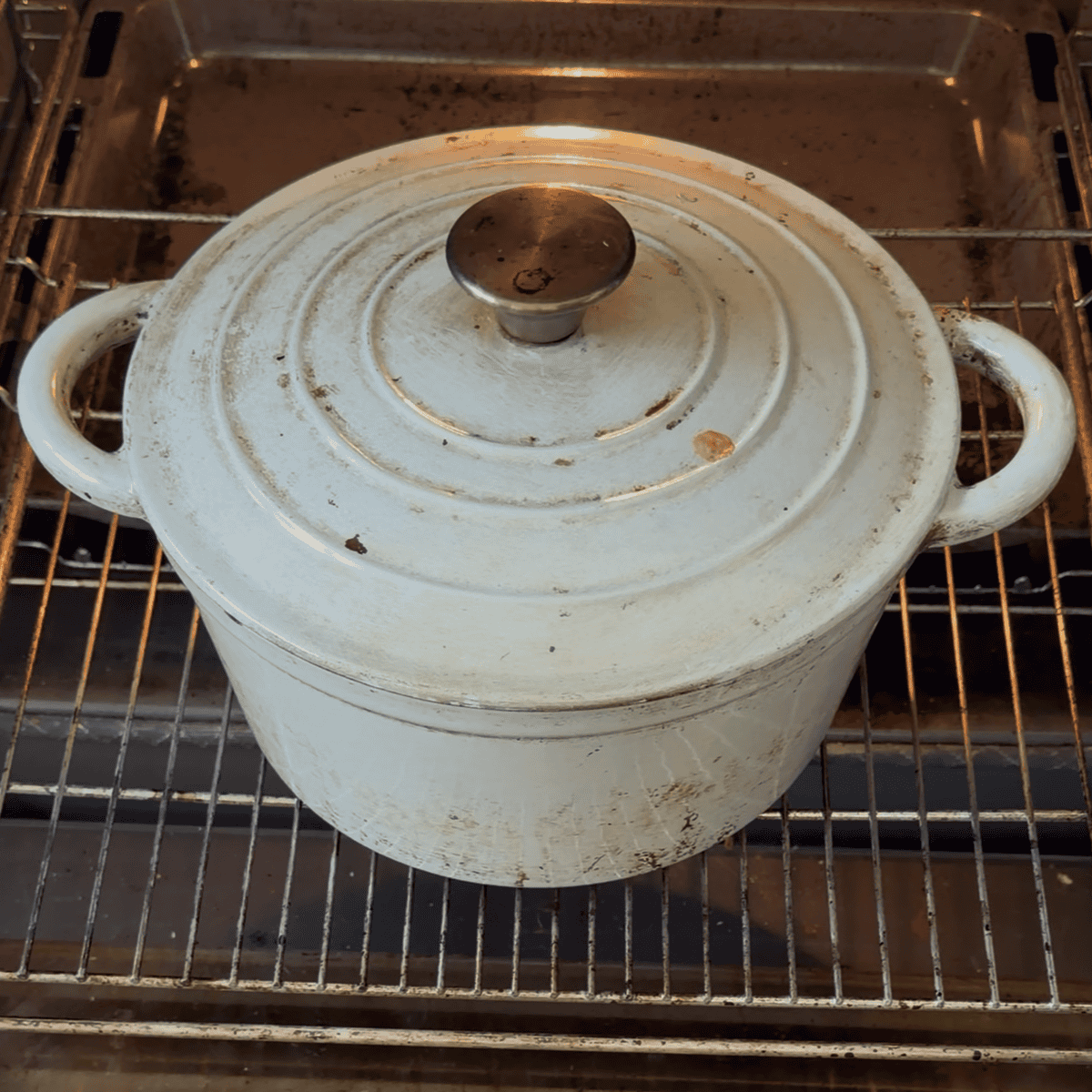
My pick is a heavy enamelled Dutch oven with a well-fitting lid. You can brown the lamb on the stove, build the sauce in the same pot and put the whole thing straight into the oven. Make sure the pot, lid and lid knob are all oven-safe at the cooking temperature.
And before anyone starts looking at a very expensive Le Creuset, let me put in a good word for my $25 Kmart Dutch oven. I’ve been using it for years without fault, and it has produced plenty of dinners I’ve been very happy to put in front of our friends. If you’ve got a beautiful expensive pot, fantastic. If you’ve got a basic one that does the job, fantastic. Let’s get some lamb in it.
I’d avoid bare cast iron for this one. A long cook with acidic tomato can damage the seasoning you’ve spent ages building up, and I’d rather save that pot for something else. An oven-safe stainless steel pot with an oven-safe stainless steel lid also works. You may just have a bit more scrubbing waiting for you afterwards.
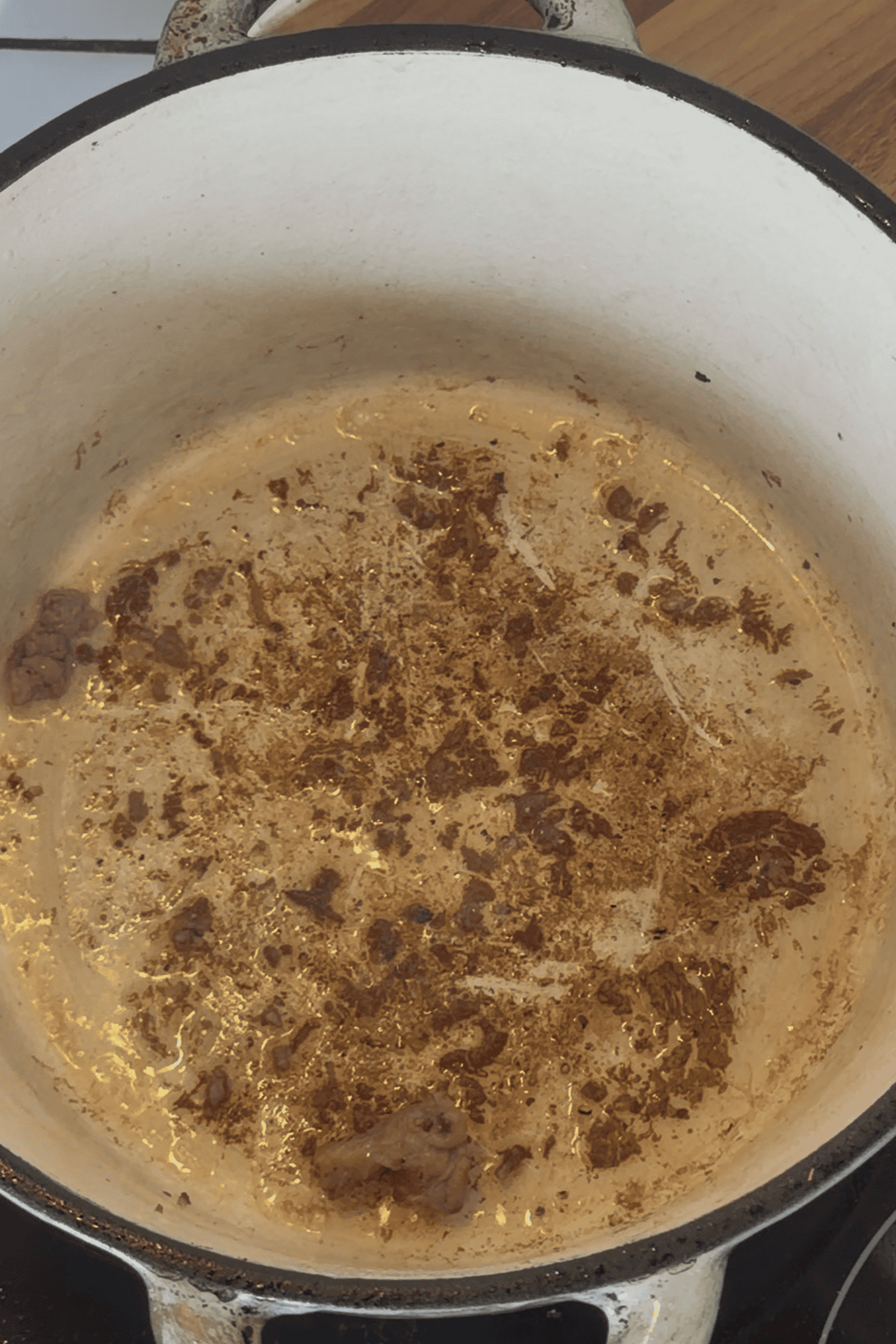
FOND, FOND, FOND. Don’t wash away the flavour.
This is the bit I get very enthusiastic about, so bear with me. Those brown bits stuck to the bottom of the pot after you’ve browned the lamb? Do not wash them away! That’s fond, and it’s absolute flavour gold. You’ve just built a layer of concentrated, savoury goodness that is about to make this sauce taste incredible. It might look like washing-up to someone else. To me, it looks like dinner is going very well.
This is why I’m so fussy about browning the lamb in batches. Give each piece some room and leave it in contact with the pot long enough to build a proper brown crust. Pile everything in at once and you’ll steam the meat in its own juices, which is a very disappointing return for standing there with a pair of tongs. A little patience here makes a huge difference to the finished sauce.
Then comes my favourite bit. Pour in the passata and scrape the bottom with a wooden spoon or spatula. All that caramelised goodness starts lifting into the tomato, the pot looks clean again, and every bit of flavour you worked for is now in the sauce. So satisfying. Please give this step a bit of love; it’s one of the reasons a simple pot of lamb and tomato ends up tasting this good.
One distinction matters here: deep brown is good, black and burnt is not. Turn the heat down if the fond is getting too dark between batches. We’re after rich lamb flavour, not a sauce that tastes like the bottom of a burnt barbecue tray.
Which pasta goes best with lamb ragu?
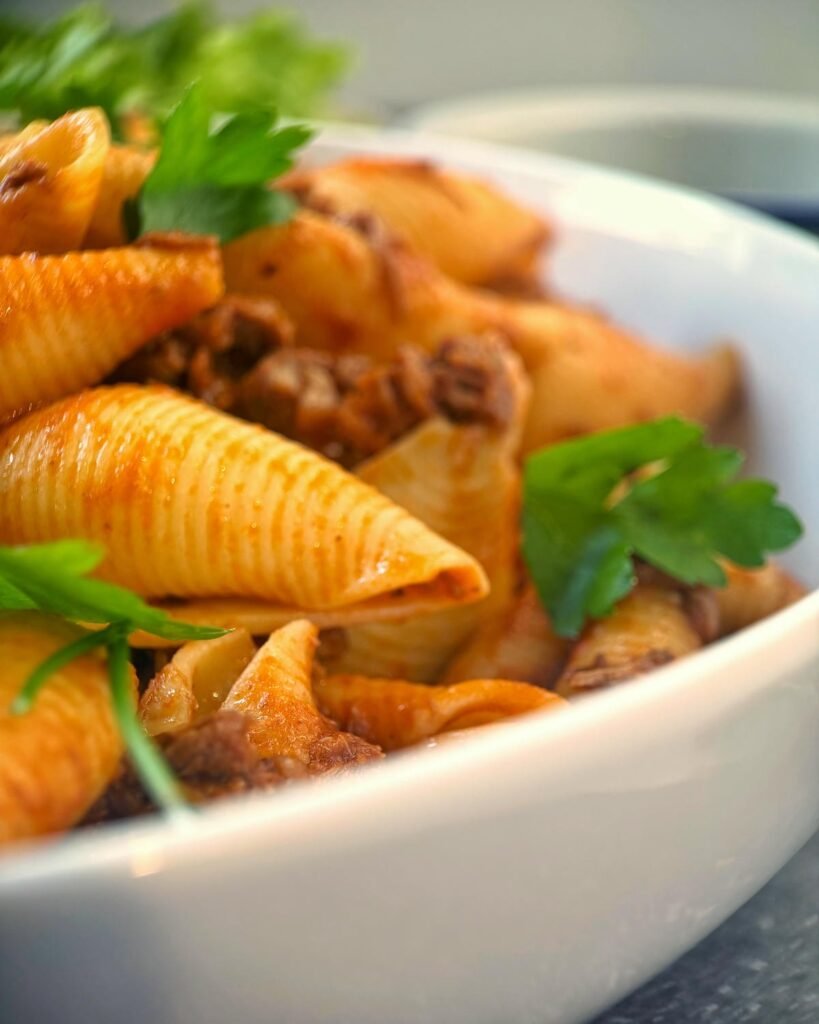
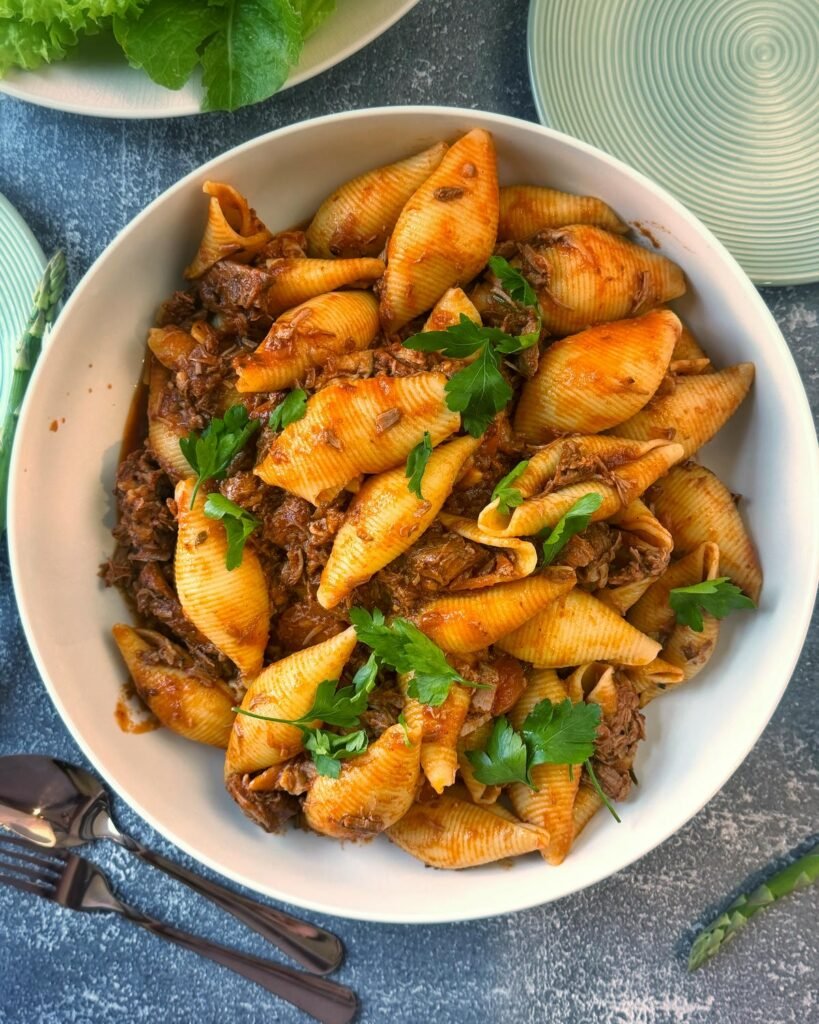
Use a pasta you love eating, but I have to put in a strong recommendation for large conchiglie shells. They catch little pockets of sauce and shredded lamb, so you get a properly loaded mouthful instead of chasing all the good bits around the bowl. Our boys love them because they can pick them up with their hands. My wife absolutely loves the resulting tomato-covered fingers and faces. Obviously. But I’m not about clean meals, I’m all about tasty food!
Sometimes I switch things up with tagliatelle or fettuccine, and honestly, a big forkful of those broad ribbons coated in lamb ragu is hard to beat.
Don’t skip the crisp salad

I know, I’ve just spent all this time getting excited about lamb and now I’m asking you to think about lettuce. But stay with me, because this salad makes the whole meal better. My crisp leafy salad with asparagus ribbons and honey vinaigrette brings that cool crunch and sharpness you really want alongside a bowl of rich ragu. The honey softens the tang of the dressing without taking it away, and a forkful between bites of pasta leaves you very ready for more lamb.
Bring the salad to the table in its own big bowl alongside the platter of ragu pasta. Toss it with the dressing just before eating so the leaves stay crisp. Nobody waited all afternoon for a bowl of soggy lettuce.
One big platter. Everyone digs in.
Pre-toss the ragu through the pasta and put it in a big platter in the middle of the table, the salad beside it and empty plates all around. Let everyone choose their own helping, pass things around and go back for more. With the boys, we help with the hot pasta, then let them get on with the very important business of finding out how much sauce one child can wear.
For me, this is half the joy of making a meal like this. I’ve cooked one big pot of something delicious, and now I get to sit down and enjoy it with the people I made it for. No disappearing into the kitchen to plate the next serving, no trying to remember who wanted less pasta and more lamb. It’s all there in front of us. Help yourself, pass the salad and make room for whoever’s coming to the table.

Equipment
- Enamel Dutch oven
Ingredients
- 1 kg lamb should or lamb leg preferably bone-in
- 700 g passatta
- 1 carrot
- 1 medium onion
- 3 cloves garlic
- 1/2 cup red wine
- 1 stock cube (beef, chicken or vegetable)
- small bunch of wood herbs
- 2 tbsp olive oil
- salt
- pepper
- pasta of your choice
Instructions
- Preheat oven, season lamb and prep vegetables.Preheat your oven to 160°C. Cut the lamb into large chunks, leaving some meat attached to the bone. Rub the pieces with salt, pepper and a little olive oil, then leave for 10–15 minutes while you get everything ready. Chop the onion, carrot and garlic, and tie the herbs into a small bunch with kitchen string.1 kg lamb should or lamb leg, salt, pepper, 1 medium onion, 1 carrot, 3 cloves garlic, small bunch of wood herbs

- Brown the lamb in batches.Heat a heavy, oven-safe pot over medium-high heat, then add a little olive oil. Add enough lamb to make a single layer with some space between the pieces. Leave it long enough to develop a good brown crust before turning to brown the other sides. Transfer the browned pieces to a bowl and repeat with the remaining lamb. Brown the meaty bone pieces too, wherever they make contact with the pot. Adjust the heat as needed so the brown bits on the bottom don’t burn.1 kg lamb should or lamb leg

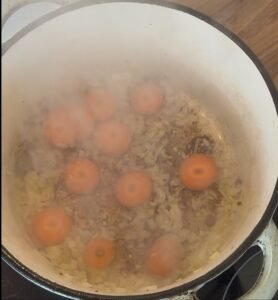
- Sauté vegetables.Reduce the heat to medium and add a little more olive oil if needed. Add the onion, carrot and garlic, then sauté for about 2 minutes, stirring so the garlic doesn’t catch. The vegetables will finish softening during the long oven cook.1 carrot, 1 medium onion, 3 cloves garlic
- The Fond!Add the passata carefully, as it may splutter. Scrape the bottom of the pot with a wooden spoon or suitable spatula as the liquid loosens the browned bits. Keep stirring and scraping until that caramelised goodness is mixed into the tomato.700 g passatta
- Build the sauce.Return the lamb, bones and any juices from the bowl to the pot. Add the red wine, herb bunch and crumbled stock cube. Pour in enough water to just cover the lamb, stir and bring to a gentle simmer.1/2 cup red wine, small bunch of wood herbs, 1 stock cube (beef, chicken or vegetable)
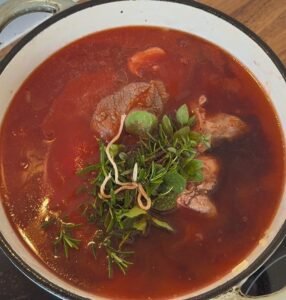
- Let the oven take over.Fit the lid and transfer the pot to the oven for approximately 3½ hours. Check halfway through: the liquid should still reach at least two-thirds of the way up the meat. Add a little hot water if it has dropped below that level, then replace the lid and continue cooking. The lamb is ready when it pulls apart easily with a fork. If it’s still firm, give it longer with the lid on and check again.
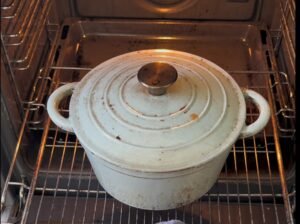
- Reduce the sauce.Once the lamb is tender, remove the lid and return the pot to the oven for another 20–30 minutes to thicken the sauce slightly. Check as it reduces; if it’s already thick enough, you can shorten or skip this step.

- Remove the bones and shred the lamb.Lift out the herb bunch and lamb bones. Use a pair of tongs and shred the lamb by simply squeezing it with the tongs. It should be soft enough to do so now. If the sauce is too thick, stir in a little water.

- Cook the pasta.Cook your pasta according to the packet instructions. Before draining, save a mug of the cooking water. Toss the pasta with enough ragu to coat it generously, adding a splash of pasta water if needed so the sauce clings to every piece. If your pot is too full, combine them in a large pan or in batches.pasta

- Pile it onto a platter and bring everyone to the table.Transfer the saucy pasta to a large, deep serving platter, spooning a little extra lamb ragu over the top. Dress the leafy salad just before serving and bring it out in a separate bowl. Set both in the middle of the table with serving spoons and let everyone help themselves, helping younger children with the hot pasta. This is a family meal, and we’ve been smelling it for hours. Get comfortable and dig in!

Video
Nutrition
Common Questions
Enjoy 🙂 – Damo.