Beef Short Rib Ragu Recipe (Slow-Braised)
I love ragu because it takes a cut of meat I probably bought on special and turns it into something so tender it melts in your mouth. An onion, a carrot, some garlic, tomatoes and a splash of red wine don’t look like much lined up on the bench. Give them a few hours in the oven with the beef and suddenly the whole house smells like ‘dinner can’t come soon enough’.
The other thing I love is how much the meat changes the whole pot. I usually let whatever’s on special make that decision for me. For this beef short rib ragu, I use beef short ribs to give the sauce a deep, beefy flavour and a silky texture.
If you love lamb as much as I do, definitely give my lamb ragu recipe a go too. It starts with much the same ingredients, but the lamb gives the sauce a completely different flavour profile. I’d happily make either one. The specials sticker can decide which comes first.
Why beef short ribs make such a good ragu
Short ribs have plenty of connective tissue running through the meat. Given enough time and gentle heat, it softens and gives the sauce a lovely silky texture.
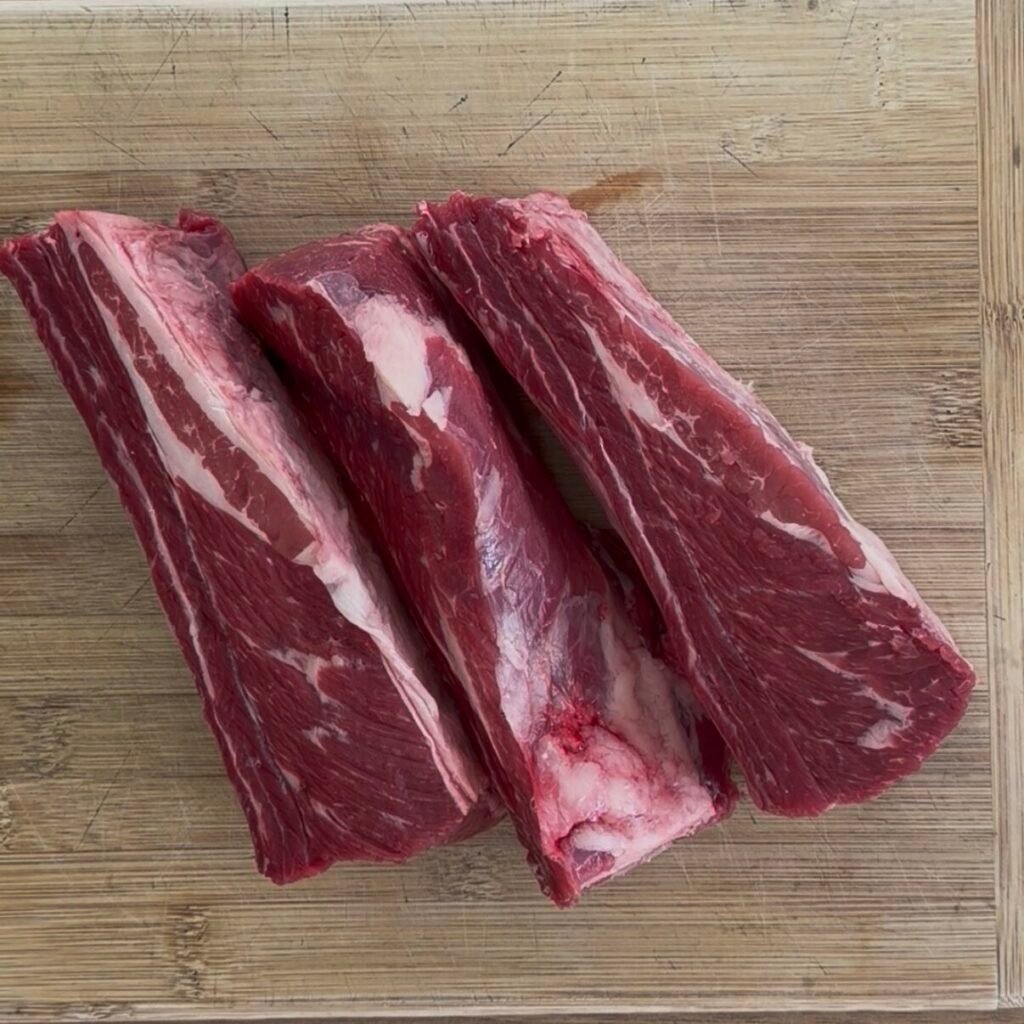
In Australian supermarkets, there are two types of beef ribs thar are sold with similar (and sometimes confusing label name); ‘Beef Short Ribs’ and ‘Beef Rib Fingers’. They look the same, sound the same but one is double the price (per kg) then the other. You want to get the ‘Beef Short Ribs’. However when in doubt, look at the price per kg and get the cheaper one :).
And choose the beef short ribs with the most amount of meat to bone ratio.
Passata and tomato purée: why I use both
Passata gives the sauce its smooth tomato base. I use passata over tinned tomatoes because passata has the skin and seeds removed which makes for a slightly sweeter tomato sauce.
Concentrated tomato purée amps up the tomato layer of flavour. For this recipe, concentrated tomato purée means tomato paste: the thick stuff in a tube or small container.
Stir it through the softened vegetables and cook it for a couple of minutes before adding the wine. The colour should deepen slightly, and it’ll start smelling very good.
Give the beef some colour
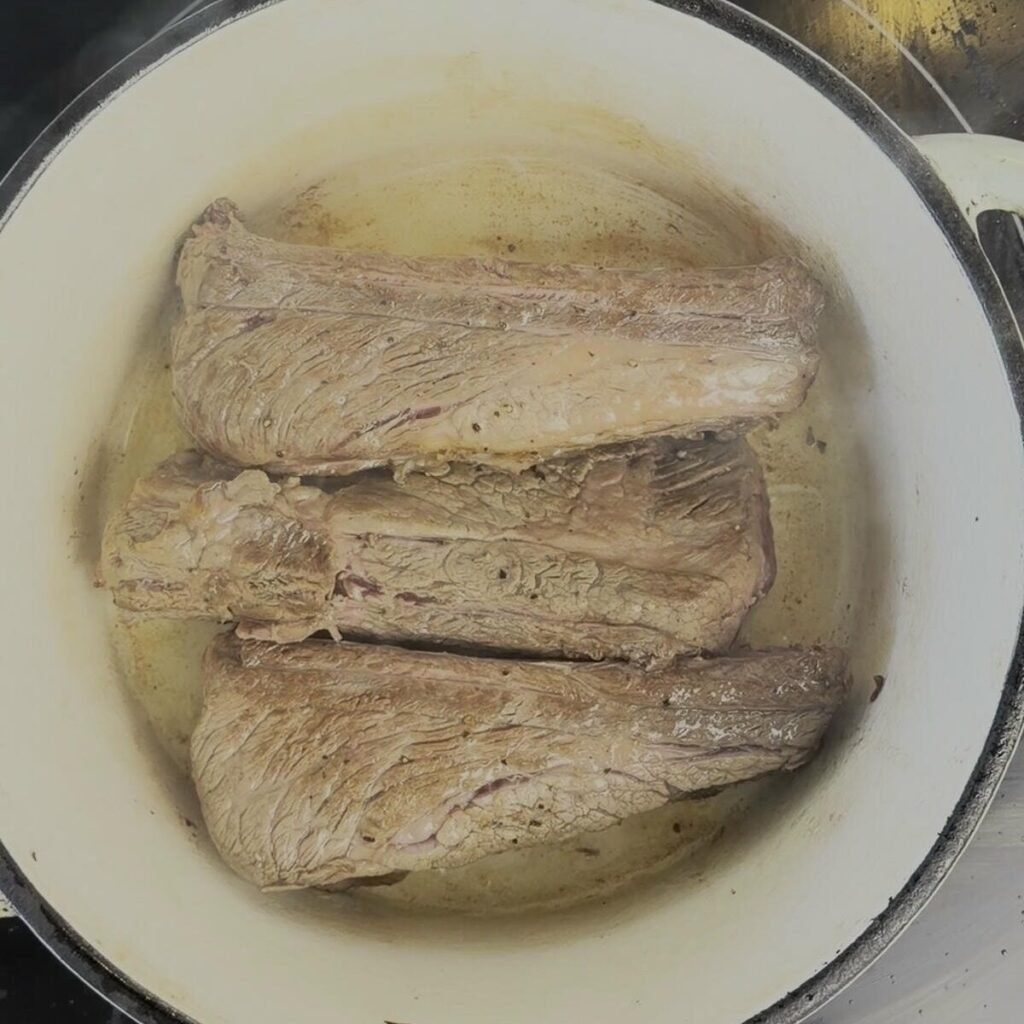
Browning the ribs is the part where I want your attention. Give them space in the pot, work in batches and let a proper brown crust develop before turning them.
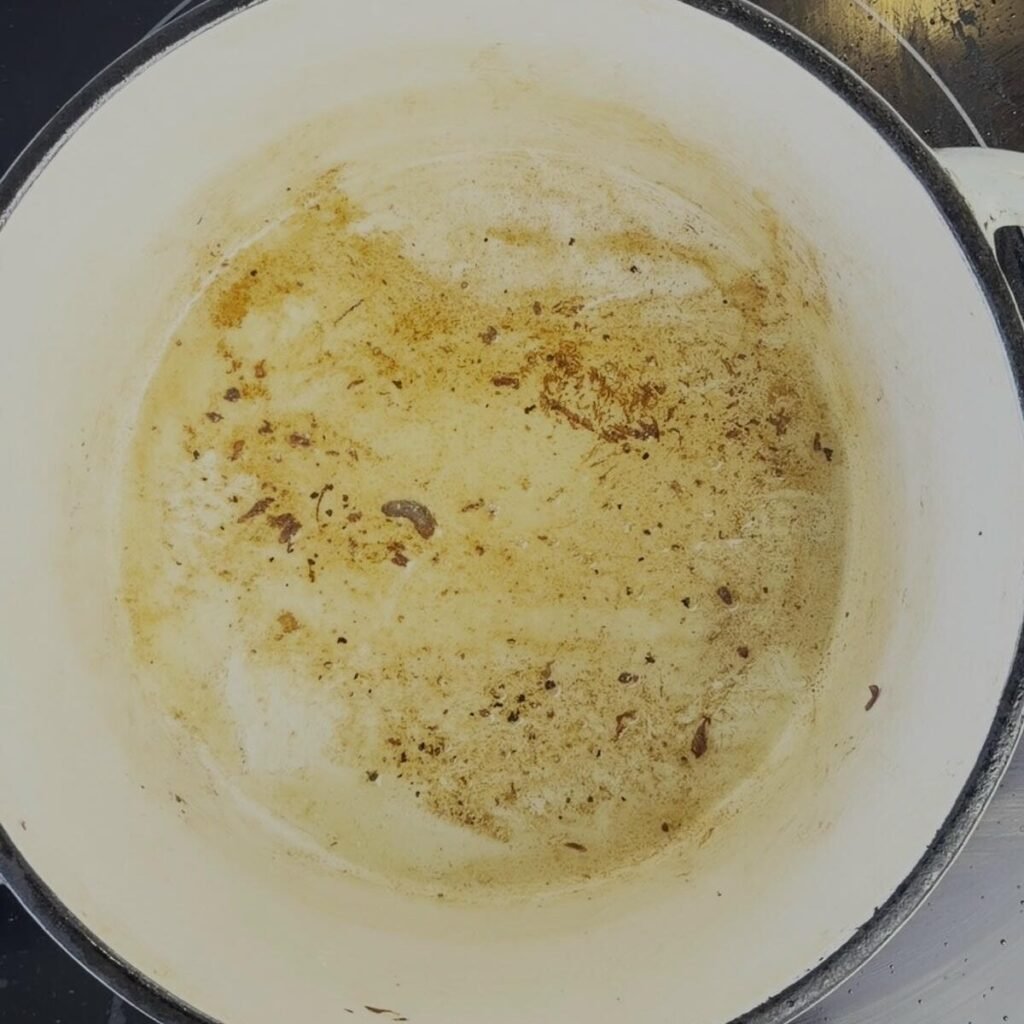
Those browned bits collecting on the bottom are going straight into the sauce. Add the wine, scrape the pot and watch them lift into the liquid. Very satisfying. Almost makes up for the washing-up.
Keep an eye on the heat between batches. Deep brown is what you want; blackened bits will make the sauce bitter. Turn the heat down if things are getting ahead of you.
Once the sauce is together and the lid goes on, the oven takes over. Your next challenge is living in a house that smells increasingly like dinner while dinner remains a couple hours away. Perfect time to go outside to have a few beverages.
Which pasta goes with short rib ragu?
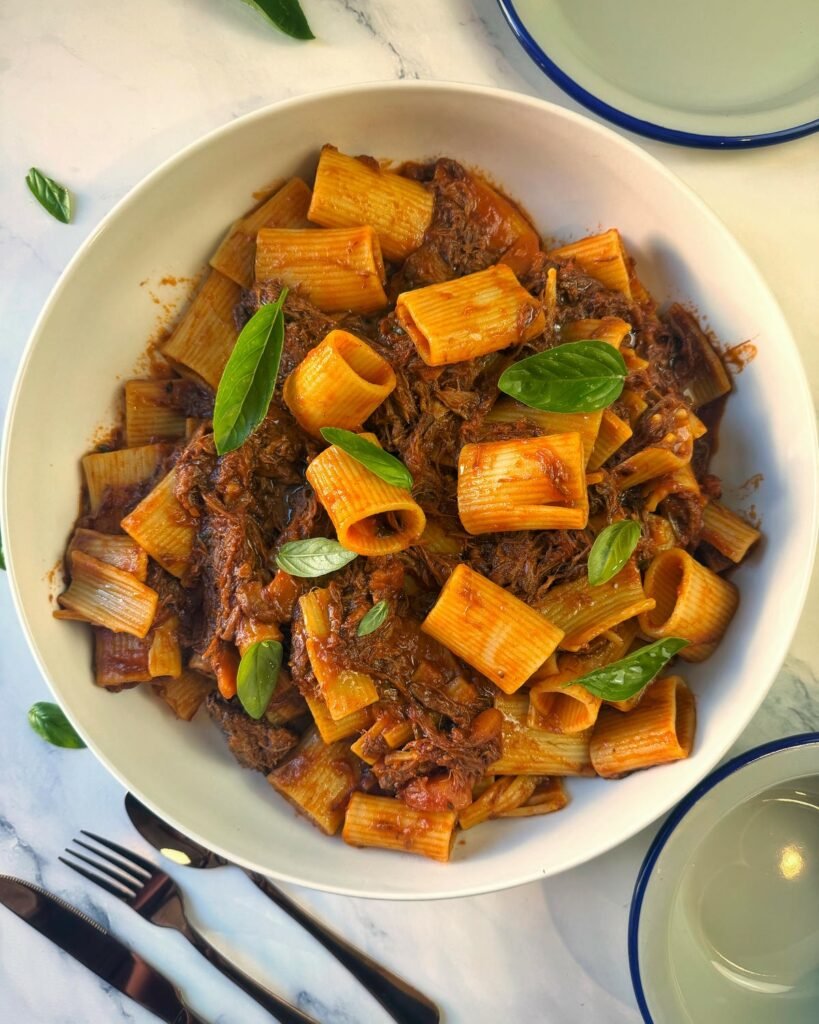
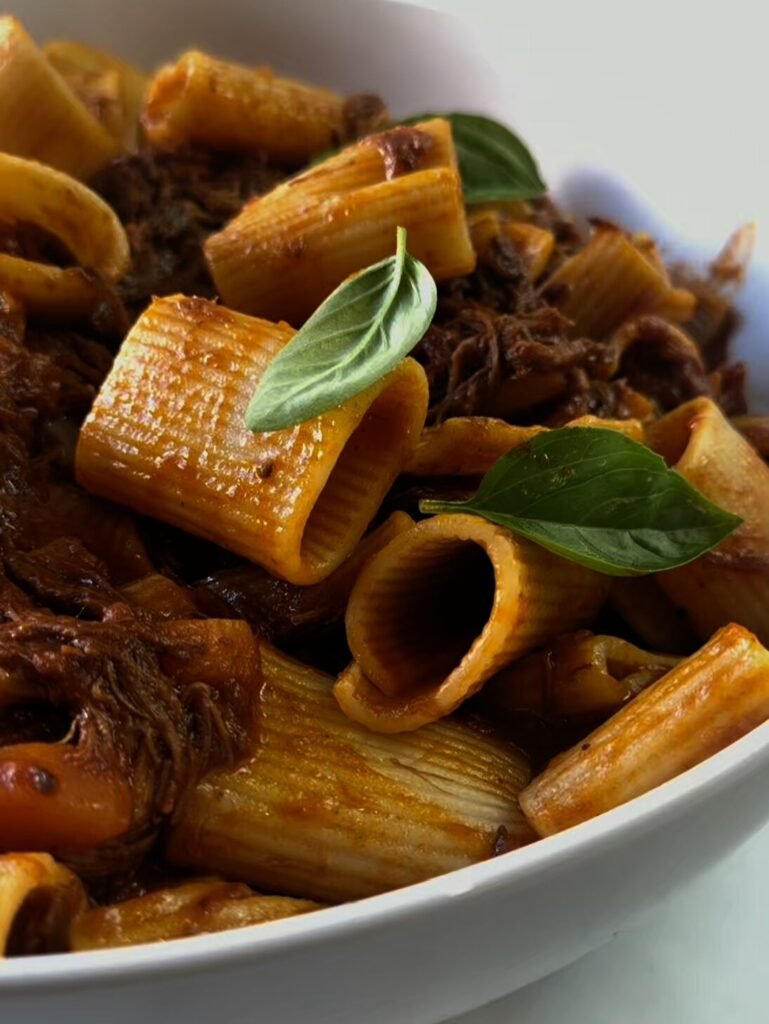
Large shells, rigatoni, tagliatelle and fettuccine all work well. Choose something that catches the shredded beef and carries a generous amount of sauce.
Save a mug of pasta cooking water before draining, then finish the pasta in the ragu with a splash of that water. Toss everything together until the sauce coats the pasta and the beef is worked right through it.
Use a large pan or combine it in batches. I appreciate the optimism involved in trying to stir pasta through a pot that’s already full, but your stove will be wearing some of dinner.
Bring it all to the table
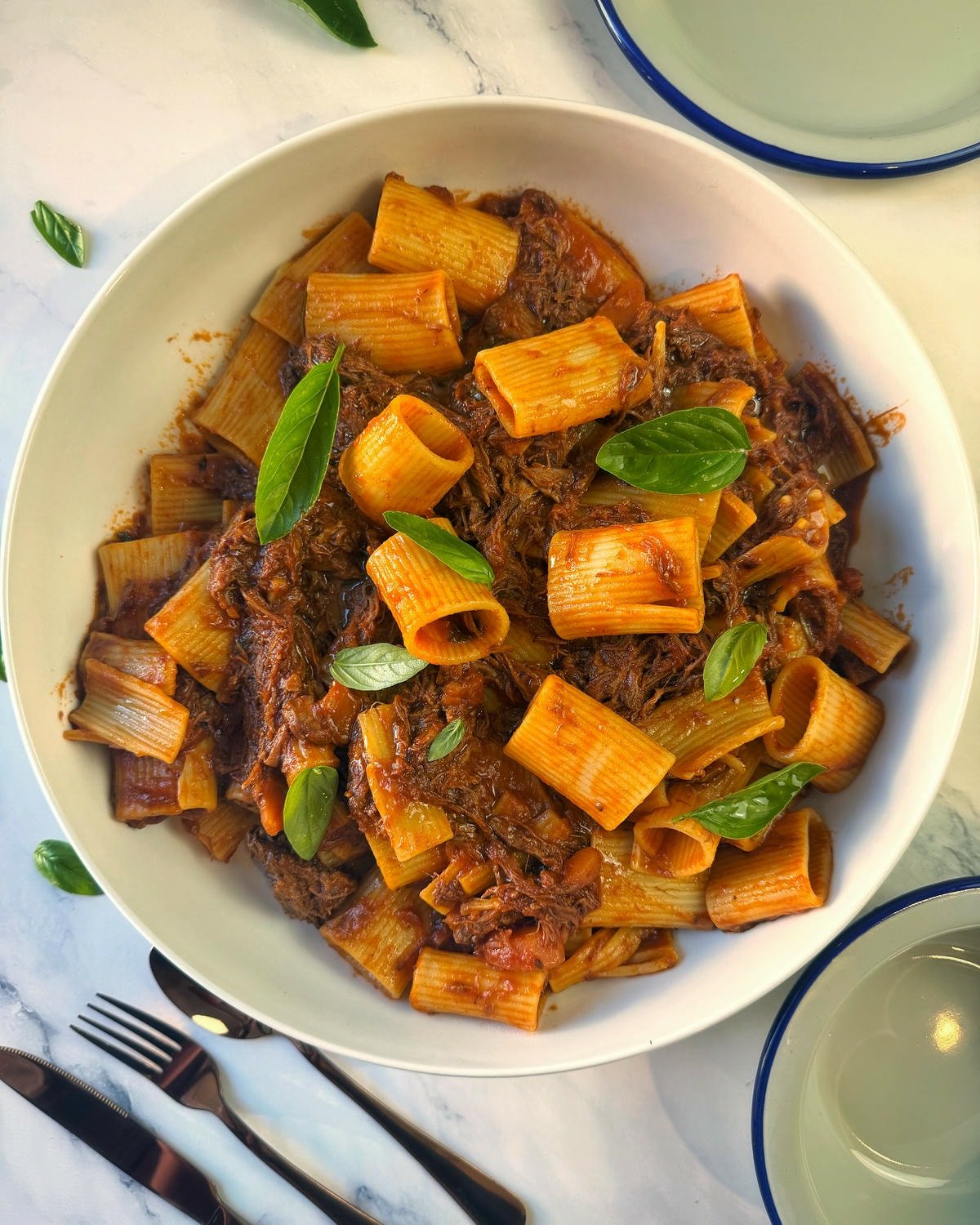
By this point, the entire house has been smelling of ragu for hours. Pile the pasta onto a big platter and get it to the table while it’s hot. Put a crisp leafy salad alongside it, with a sharp dressing to cut through the richness, and some Parmesan for anyone who wants it.
Everyone helps themselves, the platter gets passed around and I finally get to sit down and eat the thing I’ve been smelling all afternoon.
If you like this beef short rib ragu, definitely give my lamb ragu recipe a go too. Similar ingredients, but the lamb brings a whole different dimension of flavour. Another excellent way to make everyone hungry several hours before dinner.
Ingredients
- 1 kg Bone-in beef short rib
- 1 medium onion finely chopped
- 3 cloves garlic finely chopped
- 1 medium carrot chopped
- 700 g passata
- 2 tbsp tomato puree (tomato paste)
- 100 ml dry red wine
- herb bunch woody herb such as rosemary, thyme, oregano, tied into a bunch.
- 500-600 g dried pasta of choice
Instructions
- Prepare the short ribs.Preheat the oven to 160°C conventional (about 325°F) or 140°C fan-forced. Pat the ribs dry, trim any thick layers of hard external fat, separate into individual ribs (if required) and season with salt and pepper.
- Brown the beef.Heat the oil in a Dutch oven over high heat. Brown 1 kg Bone-in beef short rib in batches, letting a deep brown crust form on the meaty sides before turning. Transfer to a plate.
- Cook the vegetables and tomato paste.Reduce the heat to medium. Cook the 1 medium onion and 1 medium carrot for 6–8 minutes, until softened. Stir in the 3 cloves garlic and cook for 1 minute. Add the 2 tbsp tomato puree (tomato paste) and cook, stirring, for about 2 minutes until it darkens slightly.
- Build the sauce.Pour in the 100 ml dry red wine and scrape the browned bits from the bottom of the pot. Let it bubble for 2–3 minutes, then stir in the 700 g passata. Return the ribs and their juices to the pot and add herb bunch. Add enough water for the liquid to cover the ribs. Bring to a gentle simmer.
- Braise until fork-tender.Cover and transfer to the oven for 3½–4½ hours. Check halfway through and turn any exposed ribs into the sauce. Add a splash of hot water if the sauce is drying out. The beef is ready when a fork twists easily in the meat and it pulls away from the bone with little effort.
- Shred the beef and finish the sauce.Remove the herb stems and skim excess fat from the sauce. Shred the beef with two forks, discarding the bones, any loose bone fragments and any tough or fatty pieces. If the sauce is thin, simmer it uncovered on the stove for 10–20 minutes, stirring regularly.
- Toss with the pasta.Cook 500-600 g dried pasta of choice according to the packet instructions, reserving a mug of cooking water before draining. Toss the pasta with the hot ragu, adding a splash of pasta water at a time until the sauce coats it evenly. Serve with grated Parmesan, if using.